

Resentment is not a protection, it is a prison
Have you been feeling resentment toward someone who has hurt you for years? Perhaps toward a parent, ex-partner or even your own child? You're not the only one. Feeling resentment is human, but long-term resentment is like poison in slow motion: it poisons your health, relationships and inner peace. Yet letting go is often difficult, especially when forgiving feels like betraying yourself. In this blog, you'll discover why resentment is such a persistent emotion, the damage it does, and how to let go without forgiving.
Why you (unconsciously) hold on to resentment
Resentment is often a protective mechanism. Your anger and blame keep your painful feelings at bay. Psychologically, resentment has four common functions:
- Protection against repetition: Anger keeps you alert so you don't get hurt again. Your mind uses anger as a shield to prevent further pain.
- Identity and recognition: Being a victim can (unconsciously) become part of your identity. By remaining angry, you confirm to yourself and others that you have been wronged.
- Unprocessed grief: Beneath resentment often lies pain you could not yet access. Anger covers the grief that was too great to feel at the time.
- Maintaining power: Staying angry makes you feel in control . By holding the other person accountable, you don't have to face your own vulnerability.
- Superiority: Resentment makes you feel superior to the person for whom you hold resentment[1].
Often these mechanisms are unconsciously active. Your body and mind think they are protecting you, while keeping you trapped in an old pattern.
Feelings of resentment may fade over time, but if you have not truly forgiven the person, it only takes a small trigger to feel resentment toward that person all over again (source 1).
Something that may cause resentment at first are a number of topics, such as:
- If someone lashes out at you for no reason, such as your manager at work.
- If someone has violated your trust, such as because they passed on a secret.
- Expectations not met, such as business appointments.
- When you feel like someone is leaving you .
- If someone damages your reputation, by lying about you or telling stories.
- If someone steals or borrows something from you without asking.
- When someone acts violently, it does not matter if it is physical, verbal or emotional violence.
- If you are a victim of discrimination.
- When you feel left out.
- If you have legal problems with someone.
- If you're fired up .
Most of the time, a person feels resentment for someone of his or her own sex. People who hold grudges for a long time find it difficult to close the incident that caused the resentment themselves. They often indicate that they could put it behind them if the "perpetrator" takes responsibility for his actions.
The annoying thing about this kind of thinking is that someone you hold a grudge against may not even be aware that he or she has done something that has triggered resentment in you. So then you can wait until you weigh an ounce[2].
What long-term resentment does to you
Long-term resentment has consequences not only mental, but also physical:
- Chronic stress: Your body remains in a state of readiness, with increased cortisollevels. This depletes your immune system and slows down recovery processes.
- Sleep disorders: Anger activates the stress system, including at night. Worrying thoughts and restless dreams are common.
- Social isolation: Others often don't understand your resentment and distance themselves. This can make you feel even more disrespected, reinforcing resentment.
- Negative self-talk: Resentment feeds internal stories full of accusations and victimization, which worsens your self-image (source 1).
Thus, prolonged resentment creates a vicious cycle: it reinforces the very suffering you are trying to avoid.
Why letting go does not equal forgiveness
You don't have to set the other person free to set yourself free. Letting go means that you stop carrying the emotional burden without approving of what happened. Think of it as opening the prison door that you yourself are locked in.
How can you let go of resentment (without forgiving)?
1. Acknowledge your resentment without judgment
Write down or name honestly to yourself: yes, I feel resentment. This is the first step toward change.
2. Understand your resentment as protection
Consider: what did this anger protect me from? What grief did it cover?
3. Shift your focus from the other person to yourself
What do you need to move forward, independent of the other person's behavior?
4. Work with your body
Movement, breathing and relaxation techniques help release physical tension.
5. Seek professional help as needed
Hypnotherapy, EMDR or body-oriented therapy can help process underlying pain.
6. Visualize letting go
Close your eyes and imagine literally letting go of the rope of resentment. Feel what that's like.
Forgiving and compassion to release resentment
If you find that you still like to turn resentment into forgiveness, know that this is a process that takes time and self-care.
Forgiving does not mean approving of what happened, but choosing to free yourself from the painful emotional attachment to the past. Begin by exploring your own needs: what do you need to leave the past behind?
For example, write a letter to the person (without sending it) expressing your pain and feelings. This can help release stuck emotions.
Another effective method is practicing compassion visualizations: imagine the other person as a human being with their own pain and limitations, without condoning their behavior. Hypnotherapy can be supportive here, by reprogramming limiting beliefs such as "If I forgive, I am weak" into "By forgiving, I choose my own freedom" in trance.
Finally, techniques like EMDR or mindfulness can help you gradually reduce the emotional load of painful memories, even if you don't (yet) want to move toward forgiveness. The key lies in choosing what brings you the most peace.
The role of hypnosis and self-hypnosis in resentment release
We already talked a little about hypnosis, and now a little more 😉.
During hypnotherapy, the subconscious mind becomes accessible, making limiting beliefs visible and changeable. For example, consider the deep-seated thought, "If I let go of my anger, I lose my protection."
Using hypnotherapy techniques, these beliefs can be transformed to:"I am allowed to feel safe without holding grudges." Unprocessed emotions that lie beneath the anger can also be processed in a safe setting.
Self-hypnosis also offers a practical method to help yourself relax regularly and interrupt negative thought patterns. Through suggestions such as"I choose to free myself from this burden," you repeat positive, liberating messages to your subconscious.
Note: For deep resentments, always work with a professional hypnotherapist, especially if trauma is involved.
Common pitfalls in resentment release
- Wanting to forgive too quickly: This leads to forced forgiveness, which increases your inner struggle .
- Suppressing anger: Suppressing emotions is not the same as letting go.
- Staying Stuck in Victimhood: Acknowledge your pain, but don't dwell in it.
Resentment is understandable, but destructive. It is important to understand that resentment protects you, but also holds you captive. By consciously choosing to let go of your burden - without forgiving when it doesn't fit - you create space for inner peace. Remember: you are not doing this for the other person, but for yourself.
Hypnosis to help others or yourself
Do you suffer from resentment, or would you like to help other people release their resentment? Then knowledge of hypnosis is incredibly helpful.
Come to a free master class for an introduction.
Or sign up directly for one of our events or trainings.
Wondering if the training is right for you? Schedule a 1-on-1 consultation here.
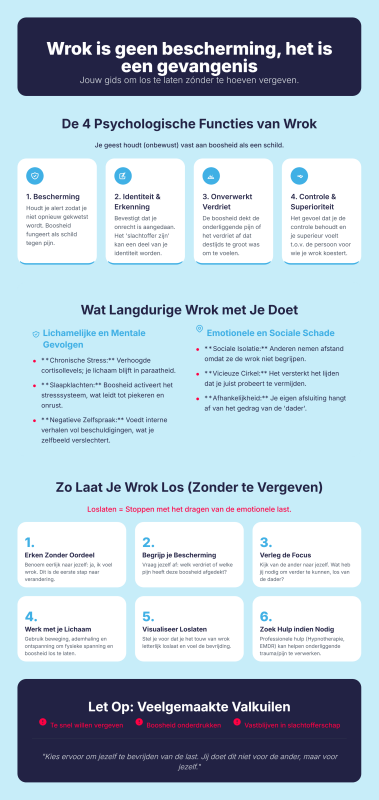
Also pin this handy infographic as a reminder:
Sources: