
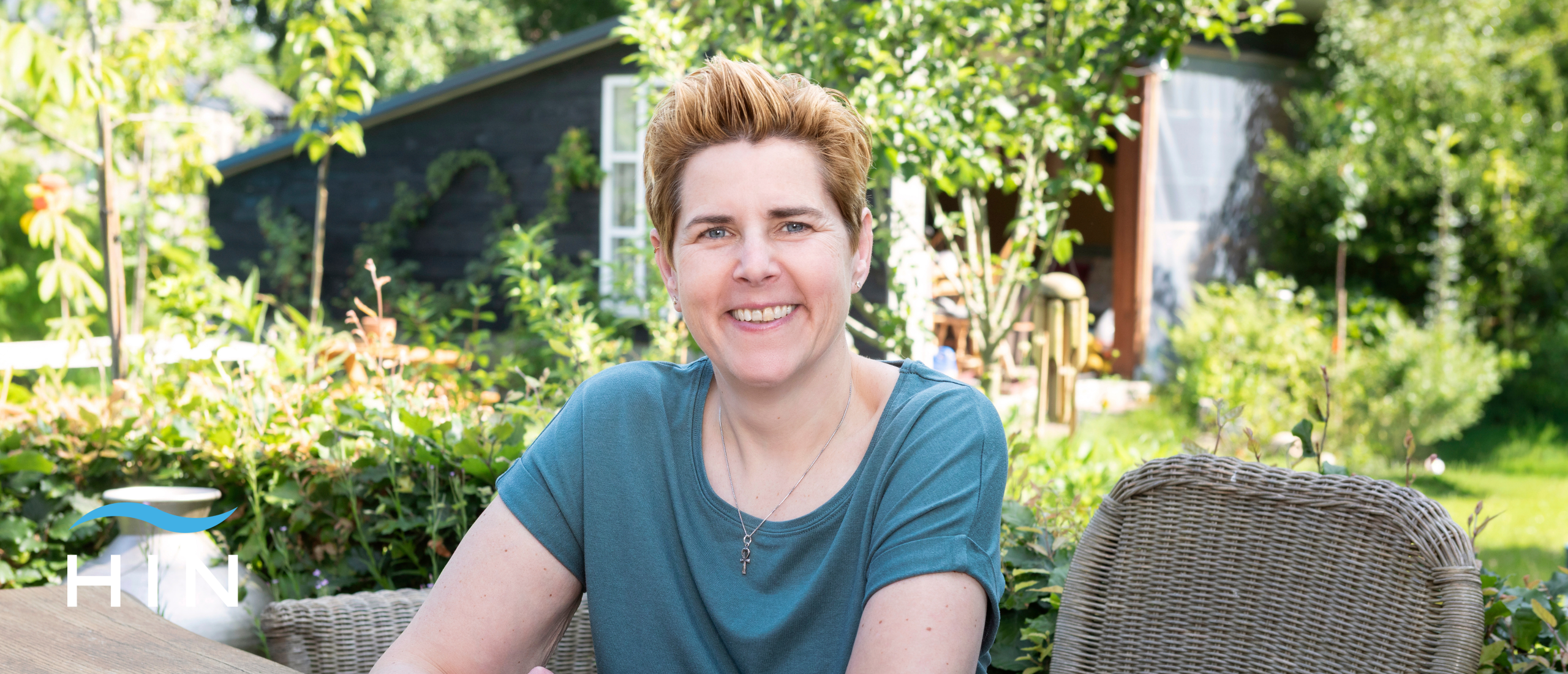

Imagine this: you don’t like cheese, you’re disgusted by tomatoes, and every night you check to make sure there’s no spider under your pillow. A few hypnosis sessions later, you’re enjoying aged crumbly cheese, letting the tomato sit peacefully on your sandwich, and leaving that pillow untouched. To Janika de Gram, this doesn’t sound like a tall tale—it sounds like her own life.
Yet her biggest change isn’t in what she eats these days or which little creatures she dares to look at. Above all, hypnosis changed the way she sees herself. And even the way she pronounces her name.
A name with a painful connotation
As a child, Janika was bullied because of her weight. Her last name gave other children an easy target. They called her “Janikathe kilogram”—a taunt that lingered much longer than the children who first came up with it.
“I used torarely introduce myself by my last name,” she says. “Forme, the name ‘Gram’ had taken on a negative connotation.”
Now, she proudly pronounces her full name correctly. This is partly due to her previous training in NLP, but mainly because of her experiences with hypnosis. Through hypnosis, she was able to change, on a deeper level, how she sees herself and what her name means to her.
“Now I just say: I am Janika de Gram. Hypnosis has brought about the biggest change in my life.”
It is precisely that name—which used to carry such a heavy burden—that is now part of her strength. She no longer hid it; instead, she made it the centerpiece of her business.
One name during a round of introductions
And that business, which kept getting better thanks in part to hypnosis, didn’t just happen by chance.
Before Janika found her way to the Hypnosis Institute of the Netherlands, she had already completed the NLP Practitioner and Master Practitioner courses. During an mBIT training course, she was seated next to a participant who had taken the course with Edwin Selij. His name came up during the round of introductions.
The rest of the group seemed to know exactly who he was. Janika didn’t. So she did what any curious journalist (which she is in addition to her work as a hypnotherapist) would do: she tracked him down.
“Ihad no idea who Edwin Selij was, so I Googled him. Of course, you shouldn’t do that, because then you end up in his sales funnel.”
What she came across piqued her curiosity. Still, she had her doubts. Wouldn’t the hypnosis training overlap too much with everything she had already learned during NLP? Moreover, the Level 1 course was offered entirely online at the time.
An experience with another HIN student ultimately convinced her to sign up. This woman was looking for someone to practice with for her exam and guided Janika through a journey of symbols.
“Iwas just lying on the couch, and there I went. It was mind-blowing. After that, I knew: this is what I’m going to do.”
Only the 1.0… really!
Janika signed up for Hypno Principles 1.0, but made a clear agreement with herself: she would not do 2.0 or 3.0. A sensible and straightforward plan… that didn’t last long.
Just before her exam, she purchased Hypno Playground 2.0. Halfway through the 2.0 course, she also signed up for Hypno Pathfinder 3.0. Between the different courses, she always took a break of about half a year so she could calmly process and apply all the knowledge.
“Ihad really told myself I would only do the Level 1 course. But in the end, I just ended up taking all three.”
For Janika, the combination of NLP and hypnosis made a significant difference. NLP helped her understand why she did certain things. Hypnosis then gave her the ability to actually change those behaviors .
“Manyclients know full well why they do certain things. But knowing why you shouldn’t eat that pastry doesn’t mean you’ll actually resist it an hour later.”
Practice, practice, and practice some more
Janika took the 1.0 course online. For the 2.0 course, she deliberately chose in-person classes in Assendelft. There, she realized how valuable it is to fully immerse herself in the world of hypnosis alongside other students.
At home, the washing machine might be beeping, you might suddenly need to take something out of the dishwasher, and distractions are never far away. During a live training day, you’ll be constantly discussing hypnosis, watching demonstrations, and practicing together.
“I thought interacting with my fellow students was really cool. You spend the whole day focused solely on hypnosis.”
That collaboration didn’t end once the class was over. During the 1.0 course, Janika went with fellow students to a bed-and-breakfast in Brittany to practice. For the 2.0 exam, they rented a house in Brabant for a few days with a larger group. Students who had already passed came to help.
During the 3.0 program, she also spent a lot of time with two fellow students. They practiced together, discussed the challenges they faced during the transformation evenings, gave each other feedback, stayed together at a B&B, and even talked about the subject during an evening game of Hitster.
“The three ofus really helped lift each other to a higher level.”
Version 3.0 gave her freedom
According to Janika, the techniques from the 1.0 course alone can make a big difference. Anyone serious about building their own practice will benefit greatly from the more in-depth 2.0 course. But she says the 3.0 course truly took her therapeutic skills to the next level.
In particular, the way she conducts an initial consultation changed. She learned to get to the heart of the matter more quickly, to listen carefully, and not to decide in advance which technique she would use.
“Withversion 3.0, you enter a session much more relaxed. You first listen to what someone has to say and then determine which technique is appropriate.”
In previous training programs, it can be tempting to directly link certain problems to specific techniques. The 3.0 program gave her more freedom and self-confidence. That feels good not only for Janika, but also for her clients.
“We used tospend a long time on the initial consultation. Now you can get to the real problem within twenty minutes.”
Each course peeled back a new layer
The courses didn’t just provide Janika with professional knowledge. She also worked intensively on her own personal issues. For example, during her Level 1.0 exam, she realized she absolutely couldn’t stand cheese. Even the smell alone was enough to put her off. After a regression session, that changed.
She still doesn’t find a simple cheese sandwich very exciting. But if you’ve got some aged crumbly cheese or a creamy Camembert, feel free to knock on her door.
“Agood 2.0 or 3.0 ‘cheese,’ so to speak? You can call me for that.”
During the 2.0 program, she used the allergy technique to address her aversion to tomatoes. Previously, she not only removed a slice of tomato from her sandwich but also dabbed the bread dry afterward. After the session, she ate a cherry tomato. She still found it a bit watery, but the disgust had disappeared.
“Witheach course, another layer of the onion was peeled away. You’re never too old to work on yourself.”
Lasting weight loss doesn’t start with the stomach
Janika knows from personal experience how complicated the struggle with weight can be. She underwent gastric bypass surgery but discovered that such anoperation doesn’t automatically change what goes on in your mind and subconscious.
A smaller stomach is a tool. The reasons why someone keeps eating, uses food for comfort, or constantly craves sweets don’t just disappear on their own. During the 1.0 program, Janika began to see this more and more clearly. She then enrolled in an additional program with Bianca, focused on weight loss through hypnosis.
“Ifthere’s a bag of Mars bars, it might still be empty at the end of the day. It’s just that your stomach has gotten smaller. That doesn’t change what’s going on in your head.”
By exploring why she kept eating and addressing this on a subconscious level, she lost weight permanently. She now works out with a personal trainer, sees herself in a new light, and can enjoy food without constantly thinking about restrictions and rules.
“Now when I look in the mirror, I think: I look great. The self-image technique from the 3.0 program, in particular, added something extrato that.”
Space for theater and a meaningful conversation with yourself
The self-image technique isn’t just personally important to Janika; she also enjoys using it with her clients. Moreover, the technique suits her playful side. She loves acting and can really let loose during thesesessions.
“Part work” is also one of her favorite methods. In this approach, she engages in a dialogue, as it were, with different parts of a person. For example, a part that wants to lose weight may be in conflict with a part that constantly craves sweets. Both usually share the same positive intention, even when their behaviors clash.
“When it comes toself-image, you can really let loose. You let go of the old baggage and then help someone step into a new self-image.”
Together with the client, Janika explores what the different parts are trying to achieve. Then, the different parts look for ways to work together rather than remain at odds with one another.
“Ienjoy engaging with those different parts of myself: can we compromise and find common ground? Ultimately, they often want the same thing.”
From weight loss to anxiety and fear of contamination
Although Janika’s “De Gram Reset” program is primarily aimed at women who want to lose weight, she addresses a wide range of issues in her practice. Lately, she has been seeing mainly people struggling with anxiety. This can include fear of taking a new step, financial anxiety, fear of vomiting, or fear of contamination.
A younger client with a fear of contamination used to be afraid to touch almost anything. Even when he wanted to scratch his face, he did so through his clothes. After the session, they tested the results immediately. Janika had him pet one of her cats shortly after the cat had used the litter box. Afterward, he touched his face without any problems.
“I find a live test like thatexciting myself, because what if something does happen after all? But he didn’t feel a thing.”
It is precisely those concrete moments that make her work special. It’s not just about talking about change, but actually experiencing in practice that an old reaction is no longer there.
“Whenhe petted the cat and then just touched his face, I thought: this is really cool.”
At HIN, you never stop learning
What Janika particularly appreciates about the HIN is that the learning doesn’t stop after the course days. The Q&As, transformation evenings, and easy access to the trainers give students the opportunity to ask questions as soon as they run into a challenge.
She also considers the hybrid format a major improvement. Students can attend in person but can also review the lessons later. This way, you don’t have to frantically take notes during a demonstration, and you miss less of the nonverbal communication.
“Not every training program lets you ask the trainers questions so easily. I find that really valuable.”
Janika herself remained active within the HIN after completing her training. She assisted and coached other students and is once again serving as an assistant at the seminar. According to her, this helps you learn to look at the field in a new light.
“Ifyou want to take your hypnosis skills to the next level, I recommend assisting in a session at least once. The questions students ask are different from those of clients, and that’s exactly how you continue to grow.”
Anyone who wants to get to know Janika or is looking for help with weight loss, anxiety, or any other obstacle can find her at janikadegram.nl and degramreset.nl. There, she sees clients online and at her home practice, with journalistic curiosity, therapeutic freedom, and a last name she now pronounces with great joy.
Would you like to help people with hypnosis, just like Janika?
You can take the training in person or online. Would you like to have a no-obligation chat to see if this is right for you? Schedule a one-on-one consultation here. You won’t be speaking with a salesperson, but with an experienced HIN coach who works with this training program and clients on a daily basis. In 20–30 minutes, you’ll get a clear sense of whether this is the right step for you and which start date suits you best.
The schedule for these sessions fills up quickly around the start of each group. Is there still a time slot available that works for you? Then book it now.


