

Imagine not having to wait until stress or anxiety disrupts your life before seeking help. What if you could invest in your mental resilience today so that serious symptoms are less likely to develop?
This is the core of preventive hypnotherapy. Whereas most therapies are only used when the need is high, hypnosis offers the opportunity to release tension early, regulate emotions and train the brain in resilience.
Unfortunately, we often see hypnotherapy used as a last resort, but what if it became the first resort?
For coaches, therapists and anyone considering becoming a hypnotherapist, this is a valuable insight. It shows that hypnotherapy is not just a form of treatment, but a life skill that helps clients structurally improve their well-being.
In this article, you will discover why prevention is essential, how to learn to recognize signs of overload early, which self-hypnosis exercises are applicable on a daily basis, and how to develop a mindset that can withstand the challenges of modern life.
Why prevention is important for mental resilience
Most forms of care focus on combating symptoms that are already in full force. A person seeks help when panic attacks become too severe, or when insomnia interferes with functioning. The downside of this reactive approach is that recovery often takes longer and the likelihood of relapse remains high, especially if resolution occurs outside of hypnotherapy.
Research shows that hypnosis can reduce many stress symptoms[1]. Hypnotherapy offers unique opportunities there: by teaching clients early on to relax, process stress and activate self-regulation, tension is less likely to take hold in the body and mind.
Thus, preventive hypnotherapy not only helps prevent problems, but also enhances people's ability to recover. For coaches and hypnotherapists, this means that you can offer more than symptom relief: you can guide clients to a firm foundation of resilience and well-being.
The hidden cost of stress
Stress is one of the biggest killers in modern society. It does not always manifest itself directly in violent panic attacks, but often subtly in the form of constant tension, decreased sleep quality or recurring brooding thoughts. This constant pressure not only undermines mental health, but also increases the risk of physical conditions such as cardiovascular disease and a weakened immune system[2].
Preventive hypnotherapy can break this spiral. By teaching people to consciously relax and regulate their thoughts , they regain control of their stress response. This makes the difference between a life of constant exhaustion and one in which energy and focus are maintained.
Learning to see signs of overload
One of the most important steps in preventive hypnotherapy is increasing awareness. Many people do not recognize the first signs of overload, or ignore them. As a coach or therapist, you can help them take these signs seriously.
Signals falls roughly into three categories:
- Physical: tense muscles, fatigue, headaches, restless breathing.
- Mental: fretting, loss of concentration, forgetfulness.
- Emotional: irritability, gloominess, feelings of powerlessness.
Naming and recognizing these signs helps clients intervene earlier. With light hypnosis exercises, they can discharge tension even before it develops into serious symptoms.
Self-hypnosis as a daily anchor
One of the greatest benefits of hypnotherapy is that it gives people practical tools for everyday use. Self-hypnosis is easy to learn and can be applied in just a few minutes a day. It does not involve complicated rituals, but simple techniques that train the subconscious to return to calm and balance more quickly.
A powerful foundation is the breath-anchor technique. By consciously pairing the exhalation with a word such as "release" or "calm," relaxation is anchored deeper and deeper into the nervous system.
Another popular exercise is the safe place visualization, in which clients in hypnosis recall a place where they feel completely relaxed. The more often this is repeated, the faster that safe place can be accessed later in stressful situations. Research shows that this can already reduce fatigue tremendously[3].
In addition, positive suggestions work very effectively. By repeating short phrases such as "I am resilient no matter what" in hypnosis, the subconscious mind programs itself to respond with more confidence.
Developing a resilient mindset
Preventive hypnotherapy goes beyond relaxation. It helps people develop a mindset that makes them stronger in dealing with challenges. Resilience means being able to deal with adversity flexibly, not speaking judgmentally to yourself but showing gentleness, and facing the future with confidence.
Hypnosis provides a unique entry point to release limiting beliefs and reinforce new ones. A client who unconsciously keeps telling himself that he "can't handle it" can, in hypnosis, replace that belief with a more powerful and helpful script. This kind of mental reprogramming is essential for long-term change. Studies show that hypnosis focused on cognitive flexibility can significantly reduce anxiety and depressive symptoms[4].
Application in coaching and therapy
For coaches and therapists working with hypnosis, this opens up a wide field of possibilities. You don't have to wait for clients to get stuck. You can integrate preventive hypnosis into pathways around career counseling, stress management or personal growth.
For example, a coach can teach clients to:
- Briefly practice self-hypnosis every day to start or end the day.
- NLP anchors (set with hypnosis) to use during exciting events, such as a presentation or job application.
- Hypnosis combine with other methods, such as breathwork or mindfulness, for a holistic approach.
Thus, hypnosis becomes an integral part of their daily lives, rather than a one-time intervention.
Common pitfalls to getting mental resilience
Yet prevention doesn't always come naturally. Many clients make the same mistakes: they start too late, they practice irregularly, or they expect self-hypnosis to solve everything at once. As a professional, it is important to clear up these misconceptions. Self-hypnosis works powerfully, but like exercise or healthy eating, it requires repetition and integration into daily life.
By communicating this clearly, you guide clients toward realistic expectations and sustainable results. Hypnotherapy often does work faster, but even then three to five sessions are often required.
Hypnotherapy as a life skill
The big difference from traditional therapy is that preventive hypnotherapy gives people skills they can use for life.
It's similar to learning to ride a bike: once you master it, you don't forget it. It helps not only to reduce existing symptoms, but more importantly to become stronger in preventing relapse.
For future hypnotherapists, this is an inspiring thought. You are not just a counselor putting out fires, but a guide teaching people how to strengthen their own well-being.
From crisis to mental resilience
By viewing hypnotherapy as a preventive tool, you shift the focus from crisis to continuous well-being, helping people not only recover, but become stronger than they ever were. For you as a coach or aspiring hypnotherapist, this means you guide clients toward lasting change, rather than temporary relief.
Take the plunge today
Want to learn how to use hypnotherapy as a powerful tool for stress prevention and emotional regulation? Then register now for the training courses and events of the Hypnosis Institute Netherlands
Discover how you can help clients build resilience, prevent stress and make a lasting impact, on themselves and those around them.
Join our free master class for an introduction.
Or register for one of our events and trainings through this calendar.
You can take the trainings in class with us, or join the class live-online.
Have a question about the training? Schedule a 1-on-1 consultation here.
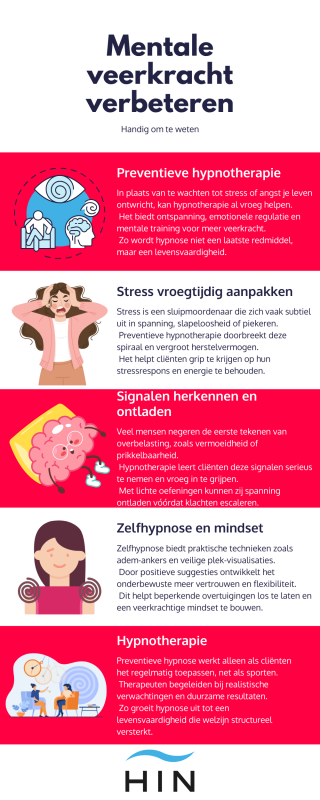
Also pin this handy infographic as a reminder:
Sources: