
Sometimes, an inner conflict looks like a serious discussion at a long conference table. With one of Iris Meijer’s clients, things were a bit more lively. Her subconscious communicated with the help of minions.
Those little yellow figures were running all over the place in her imagination, while her inner critic had completely lost control.
During a session, that panicky inner critic transformed into a calm supervisor. Suddenly, this part of her could once again oversee what was happening and tell the “minions” what to do. Chaos gave way to order and calm. “I wish I could make videos showing what her perception looks like,” Iris says enthusiastically.
It’s exactly the kind of change that brings her joy: profound, yet at the same time playful and light.
Working with Both Body and Mind
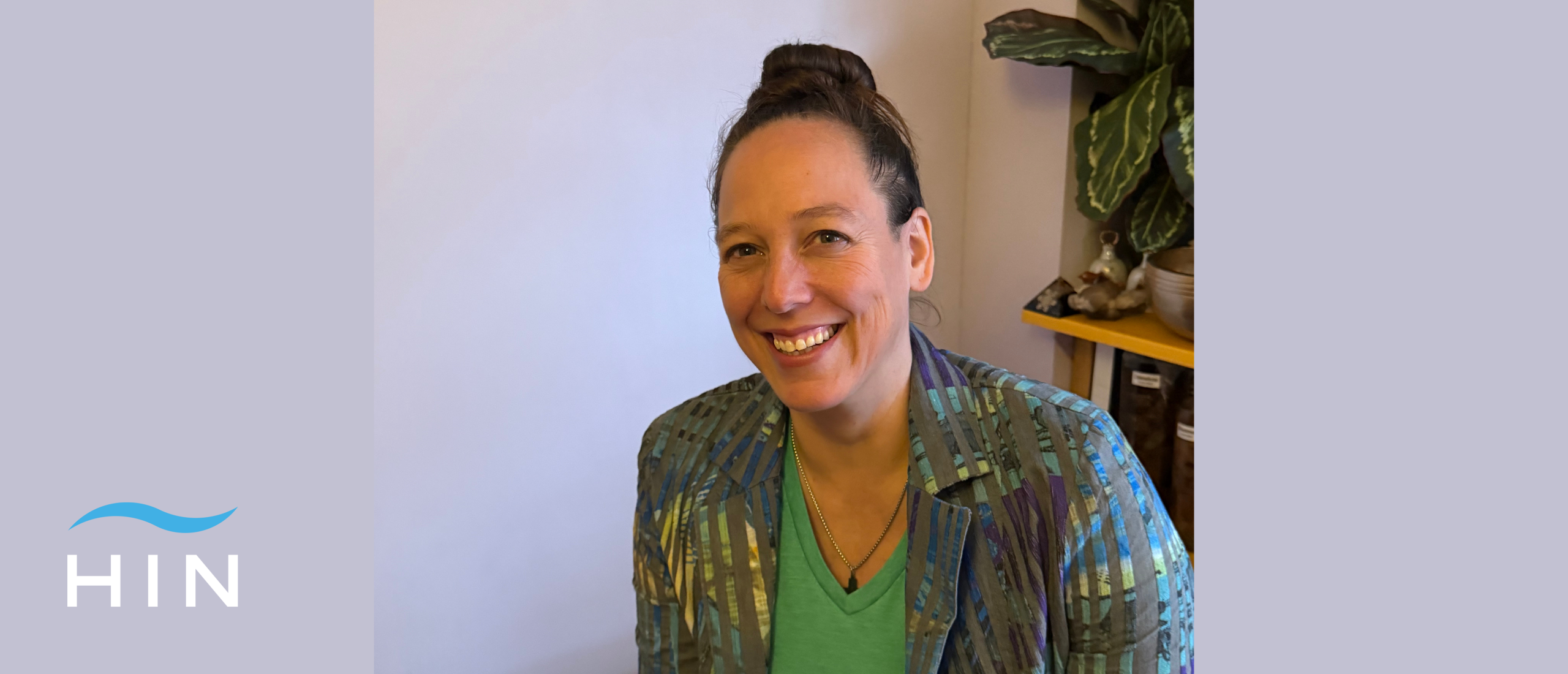
Iris Meijer is a hypnotherapist and hypnocoach. She also works as a coach and chair massage therapist in the corporate sector. Some companies invite her every week or once every two weeks so that employees can receive a short massage during the workday.
Through this, Iris works with people on both a physical and mental level. Her company is called IMU Bodywords. The name refers to the communication between the body, the mind, and the words a person uses.
“How do I communicate with my body, and how does my body communicate with me?” is a question central to her work.
Sometimes the body has been sending signals for quite some time, but a person is unable to understand them. Iris helps people pause to reflect on these signals and rediscover a sense of calm and relaxation.
Looking for the off switch
Many of Iris’s clients work in the business world. They have demanding jobs, carry a lot of responsibility, and are used to always pushing forward. Even when the workday is over, their minds remain active.
“It never stands still and it just keeps going,” says Iris. “People wonder: How can I unwind a little, and how can I find that switch?”
That’s why she regularly combines hypnosis and coaching with breathingand movement techniques. The goal isn’t just for someone to relax during the session. Iris also wants to teach people how they can help their own nervous system and body find peace again.
The Difference Between Hypnotherapy and Hypnocoaching
In hypnotherapy, Iris works with deeper-seated issues, traumas, and symptoms that sometimes require more time to address. For example, she supports people who have experienced traumatic events and are dealing with PTSD-like symptoms.
Hypnocoaching is usually shorter and more practical. Iris uses small hypnotic techniques that also overlap with NLP. This doesn’t always require a person to go into a deep state of hypnosis. Sometimes she simply asks a client to close their eyes, visualize something, or give a certain feeling a shape or symbol.
“Sometimes these are very brief techniques, where a person doesn’t really need to go into a deep state of hypnosis,” she explains. Yet something significant can change in a short amount of time.
Daring to Choose a Different Path
Before Iris established her own practice, she worked for eighteen years in the corporate sector as a human resources and payroll administrator. Prior to that, she worked in the hospitality industry. Although her work is very different now, she sees a clear common thread: she has always worked with people.
Around 2016 and 2017, doubts began to set in. She wondered if she wanted to continue doing her work this way. Iris reflected on the regrets people often experience at the end of their lives. A commonly cited regret is that they didn’t pursue their dreams.
“I thought: I don’t want that,” she says. “So what is my dream, then?”
She grew up surrounded by massage, nature, and stones and felt she wanted to do more with them.
From massage to coaching
Iris had already completed a course in Japanese acupressure massage in 2011. Just as she was about to further develop her plans, she broke her finger. That immediately showed her how vulnerable a profession can be when you rely solely on physical labor.
That’s why she added coaching to her practice. In 2017, Iris completed a shamanic coaching training program. Drawing on that background, she began guiding people through sweat lodge experiences, among other things. During such an experience, intense emotions and old memories can surface.
Hypnotherapy ultimately became the missing piece that tied her previous training and experiences together. “It was actually a kind of convergence of everything I do,” she says.
The Seed of the HIN
Around 2020, Iris first came into contact with the Hypnosis Institute of the Netherlands. She had seen the HIN mentioned before, but at that time she had just purchased another course. It wasn’t possible to take everything at once.
Later, a friend sent her a link to a program about “The Logical Consequence.” That planted another seed. It took a while before Iris actually began the training . By the end of the COVID-19 pandemic, the time had come.
“It was Edwin’s trap of inevitability,” she says with a laugh.
Initially, Iris signed up primarily for her own personal growth. She was coming out of a mentally challenging period that she describes as burnout and depression-like. She hoped that hypnosis could offer her something on a personal level.
An intense first experience
Her first experiences with hypnosis were impressive. During a symbolic journey, Iris had a strong emotional reaction. The experience moved her deeply.
That’s precisely why she noticed that something was actually happening. When she subsequently received sessions with the right guidance, she felt that the method was helping her. She was particularly impressed by the way questions were asked .
“You don’t stop after one or two answers thinking, ‘This is it,’” she explains. “You really keep asking questions until you get to the core and the essence of the problem .”
For Iris, it felt as though certain emotions were tied to the past with a rubber band. She experienced the emotion in the present, even though its origin lay somewhere in the past. Hypnosis helped her change that connection, so that the emotion could return to the moment where it belonged.
Don’t just talk—make a change
Before starting her training, Iris had already tried various forms of talk therapy and coaching. Talking could be pleasant and sometimes provided relief, but it didn’t give her the solution she was looking for.
“It was nice to get things off my chest, but it never really led me to a solution,” she says.
Through hypnosis, she did see patterns change. Some symptoms and habits disappeared, and others became milder and less burdensome. She gained more perspective and was able to view herself and her behavior with more humor.
In doing so, the institute embraces a well-known quote by Edwin Selij: “I take you as a person seriously, but not your problem.”
For Iris, this doesn’t mean downplaying someone’s grief or symptoms. It means that a person is so much more than the behavior or problem they’re temporarily stuck in.
The training also touched on her own experiences
Iris took her first course online. She found it enjoyable and educational. She discovered that online hypnosis can work very well, precisely because people can participate in a session from the safety of their own environment.
She took the second course (Hypno Playground) in person. She enjoyed interacting with other participants and the conversations during breaks. At the same time, this part of the course was personally quite challenging at times.
“Sometimes I was really touched by my own emotions,” she says. She found the guidance from the coaches to be very valuable. Sometimes just having someone listen was enough. At other times, a simple technique helped her move forward again.
Greater Confidence Through 3.0
Iris initially took the 3.0 (Hypno Pathfinder) course to complete her training. However, this course gave her much more than just a sense of completion. The sharing exercises, in particular, aligned well with her previous experience with Voice Dialogue.
In “part work,” we examine different inner parts, each of which has its own desires, concerns, or beliefs. For example, one part may long for change, while another seeks security and wants to keep everything the same.
“I really recognize those inner conflicts in myself, but I also see them a lot in other people,” says Iris. That’s why she regularly uses parts work and harmonization in her practice.
She also found Edwin’s feedback session to be informative. The 3.0 course helped her delve even deeper into the subject matter as a therapist.
Daring to work with more serious issues
After completing Level 1.0, Iris already had enough confidence from her previous training to start working with clients. However, at that point, she would not yet have worked with people experiencing severe PTSD-like symptoms.
That changed after the follow-up sessions. “After version 1.0, I would never have started working with PTSD, but now I think: fine, I’ll stick with you until you’ve worked through it,” she says.
By working on her own personal issues, her confidence grew . At the same time , she gained access to more techniques. This allows her to better adapt to whatever arises during a session. She no longer has to follow a single fixed method but can combine different techniques and choose her own path.
They thus embrace the “Go First” principle by first practicing the techniques themselves before applying them to a client.
Hypnosis on the massage chair
Iris doesn’t just use the techniques from the training during in-depth hypnotherapy sessions. Even while working as a chair massage therapist, something unexpected can come to the surface.
A massage sometimes lasts only ten to twenty minutes. Yet someone can suddenly be moved by a feeling or a memory. Iris can then use a quick reset, a “swish,” or a symbolic transformation.
“I think those very brief interactions that lead to results are really cool,” she says. It shows that hypnosis doesn’t always have to be a long session. Sometimes, a small image or a different perspective can be enough to help someone feel at peace again.
The combination of massage, coaching, hypnosis, and sweat lodges keeps her work varied. “That variety among the different things I do is what I enjoy most.”
Being completely yourself
Iris’s most important core value is that people should be allowed to be completely themselves—not just the beautiful, easy, or socially accepted parts, but also their insecurities, contradictions, and rough edges.
“You’re allowed to fully embrace every part of yourself,” she says.
To make this possible, Iris believes openness is key. People need to feel free enough to talk about what’s really going on. For example, a client might come in wanting to quit smoking, while sadness, fear, or another underlying need is hidden beneath that behavior.
Iris is grateful when people trust her enough to let her see that deeper layer as well. She tailors her guidance to the client’s perspective, drawing on her own authenticity, energy, and lightheartedness.
From Burnout to Resilience
The HIN has done more than just provide Iris with professional expertise. When she started, she still regularly felt stressed, down, and overwhelmed. Now she feels confident, open, and energetic.
Not everything in her life has changed, nor have all her patterns completely disappeared. According to Iris, the most important difference is that her resilience has grown significantly.
“I used to think, almost to the point of tears: ‘It’s all too much.’ Now I find myself thinking much more often: ‘It’s okay, everything will be fine.’”
She has also made great strides in her business. Her services have expanded to include hypnotherapy and hypnocoaching, and her other activities have grown. Her revenue has increased, and she feels much more like an entrepreneur than she did at the start of her training.
As deep as necessary and as light as possible
Iris’s approach is best summed up by a motto she heard during a Voice Dialogue training: “As deep as necessary and as light as possible.”
Sometimes it’s necessary to confront painful events and old patterns. But that doesn’t mean everything has to remain heavy and serious. Humor, imagination, and playfulness can actually provide the momentum someone needs.
Whether through hypnosis, coaching, massage, a sweat lodge, or a head full of minions: Iris helps people reconnect with themselves—completely, including all parts and rough edges.
Would you like to learn more about Iris and her approach? Visit her website.
Learn hypnosis, just like Iris
You can take the training in person or online. Would you like to have a no-obligation chat to see if this is right for you? Schedule a one-on-one consultation here. You won’t be speaking with a salesperson, but with an experienced HIN coach who works with this training program and clients on a daily basis. In 20–30 minutes, you’ll get a clear sense of whether this is the right step for you and which start date suits you best.
The schedule for these sessions fills up quickly around the start of each group. Is there still a time slot available that works for you? Then book it now.