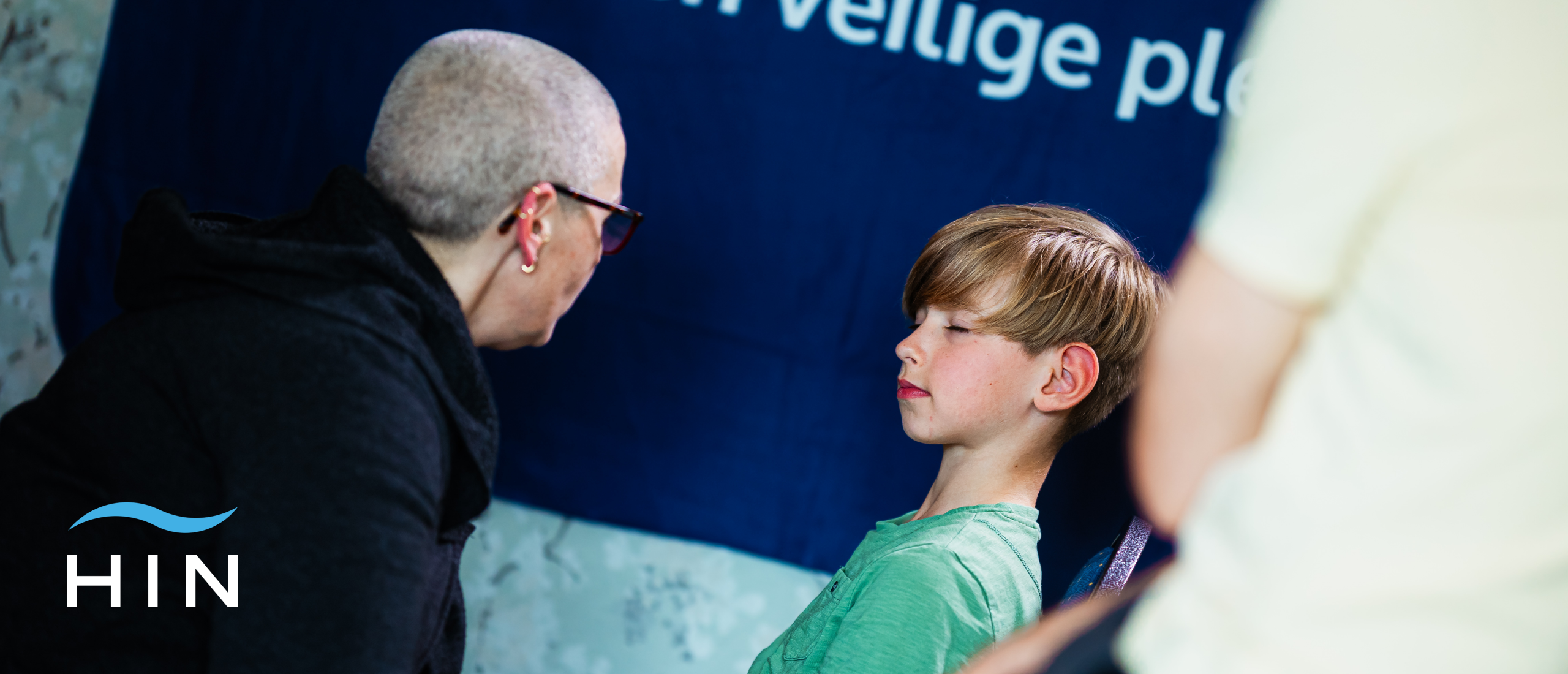

Recently I received a message from a nanny asking what she should do about the tantrums of a child around 5 years old. It wasn't her own child, but she knew that the child's father also "suffered" from holding back anger. Only he dealt with it by blowing and not doing anything else about it.
During tantrums, the child growls, hits, kicks, kicks, scratches. And as a babysitter, she doesn't know what to do about it.
What is useful to know is that children between the ages of 3 and 6 are more likely to suffer from tantrums[1], but of course you have to do something about it.
But what?
The first solution for a babysitter is: Go away, just don't go there again.
But I had also asked some clarification questions.
If you are a babysitter for a child who is terrorizing the place, you are actually an outsider and essentially have very little influence.
You are not necessarily in the child's circle of influence. For the child, there are two people who are an authority. In fact, when it is born, you unconsciously create a social map of your environment. The first people on that map are mom and dad.
The child then listens to that because they "have to."
Later, the babysitter joins in, but that's not what the child has to listen to. That's just mom and dad. Mom and dad have to give the babysitter authority, with suggestions such as "You have to listen to her. She is playing mommy for a while now."
But if the child is just as angry with his mother, there is little point.
It could be a solution for babysitters to take a moment to ask parents to tell the child to listen to the babysitter.
In that case, you get the leadership role.
After all, if it is not there, the child has no guidance and takes charge himself. And that doesn't always go well.
But if the parents don't take charge that doesn't work out and then as a nanny it's better to get out of the system.
Even later in life, a person can do a lot with hypnosis to change the influence that this mental map they have built up. To solve problems created by interrelationships.
We also call this the social panorama. As a child, you are still building it and it is not yet a big picture, but there are different maps. Like the map of home, school and with friends.
You may notice yourself doing things just a little differently in one location than another. Basically, this is because of that map you once built.
No tantrum in school
Because, at the same time, it was said that the child at school was an exemplary child, something the babysitter could not imagine.
So somewhere it can be done. Because in that social map you form as a child, school is a separate field, a separate ticket. And in that field, the teacher takes charge and then the child listens.
After all, a child wants someone to take charge because that gives the child peace of mind. So I can well imagine that at school the child is actually calm and well-behaved.
Imagine if it had been someone like Mom or Dad not taking charge, the child would have had tantrums at school, too.
So if you're a babysitter and don't want to leave, join the school. See how things are going at school and ask if you can observe in class, or from a distance how he behaves.
This is because it makes you feel differently about the child. It can also make the child feel differently about you. After all, if the teacher or master gives you authority status in that class and he listens to you in class.
Then in his mind it can cause him to see you as an authority and no longer listen to everyone else, but only to you. The child may then still be angry, but at least no longer toward you as the babysitter.
That doesn't solve the child's problem, but it does solve the problem you may have as a babysitter.
Child observation: What makes him calm?
Sometimes it can also be something other than authority that makes the child calmer at school. Perhaps he can play certain games, or there are friends he plays with. You can then use that knowledge while babysitting.
- You can play games with him.
- You can ask what he likes about certain friends and do something with that.
- You can say "I saw you played nice with the cars at school, shall we do the same here".
- Maybe you can even bring a toy he has at school but not at home.
Again, this still doesn't solve anything for the child, because if you then leave again, he may freak out at his parents again.
But if you stay for a while and the child builds a rapport with you and you say goodbye in a good way.
You can then apply techniques of hypno-parenting. In this, you give the child positive suggestions and this helps to reduce tantrums[2].
You give him some suggestions such as:
"I'm going to do something else right now, but I'm here for you and you're just top notch!"
That may be just enough that later in life he can say that home was shitty, but someone was there for him. That little boy can then build on that later in life.
The realization may come that there are more tickets and that he just needs to connect with people outside the field or ticket he knows.
To say goodbye properly and not with adopted frustration, a babysitter still needs to get into his world and see him as he is, beyond the anger and aggression.
You may not be able to do that at home, but you can at school. You have to go to his other card or field.
Consequences of your action
And imagine if things get a little better, then Mom can relax more, too. Dad can see that things are getting better and that can transform things as well.
Suppose that doesn't happen, the child still realizes that there are people other than his or her parents.
You can also say to the child:
"There are more people like me. There are a lot of people and not everyone is the same. So there are a lot more people like me."
The image of the child
It is especially important to get a different view of the child, as this will give you something else to be there for the child.
A child often throws a tantrum only because he wants attention or love. He wants that from mom or dad. The best solution is for mom and dad to work with themselves and get an even more loving relationship with each other so that the little boy doesn't react like this.
But they have to be willing and able to do so. As a nanny, you don't control that.
So as an outsider, you can especially look to see the child in a different way, other than as an angry child.
It's hard when you're in the middle of it, but look for places where it's quiet. After all, then he is in a place where he does not have to struggle and where he feels happy(er).
Then suddenly you see it's a sweet little boy. That changes your feelings about the child, and the little boy feels the same way.
To the child, the two worlds are separate, but when you come into those two worlds, you are the connector of those worlds and that can change a lot.
Also watch this video:
Do you want to help people with children or people who work with children improve themselves and help children even better? Then knowledge of hypnosis may be essential.
Come to the free online master class for an introduction.
Or check our calendar for our events and trainings. You can take the training either classroom in our building or live-online.
Sources: