Reduce fear of wasps for summer
Have you noticed? If you suffer from a fear of wasps I bet you have, because there are already bugs outside. This year I saw the bumblebee for the first time and then a butterfly. Then the wasp can't be far away. If you suffer from fear of wasps it can be very annoying, because then you cannot enjoy the beautiful spring and summer weather to the fullest.
To ensure that you can reduce your fear of wasps, in this article I will discuss wasps and techniques to reduce fear and give you practical tips that you can already apply at home.
Wasps
There are a total of 24,000 wasp species. The common wasp is mainly found in the Netherlands and Belgium. In the Netherlands and Belgium, the folding wing wasps are especially common. This is a wasp that lives in a colony. Each year a single queen makes a new colony because after each summer the rest of the wasps die.
Wasps feed their larvae insects, but often eat nectar from flowers themselves just like bees. The difference between a bee and a wasp is that the wasp does not lose its sting and can continue to sting. Like bees, you can get an allergic reaction from a wasp sting. If you get stung in the wrong place on your body, such as your neck or worse in your mouth or windpipe, if you accidentally swallow a wasp with a sip of drink.
This can be life-threatening in that your neck can swell up, squeezing your windpipe shut. If you are stung there, it is important to get to the emergency room or get help as soon as possible.
Wasps usually emerge in May and leave in October. Therefore, now is an ideal time to already do something about your fear of wasps. That way, you won't suffer from fear at the first wasp you see this year.
Overcoming fear of wasps
With this information in mind, it’s not at all surprising that you’re afraid of wasps, but if it’s really bothering you, it’s important to do something about it. If you have an extreme phobia of wasps, you may have a panic attack at the sight of wasps or even at the mere thought of them. So it’s better if you aren’t reminded at all that wasps exist and that this insect can ruin your entire summer afternoon.
When you see a wasp (or think about one), you may experience the following reactions:
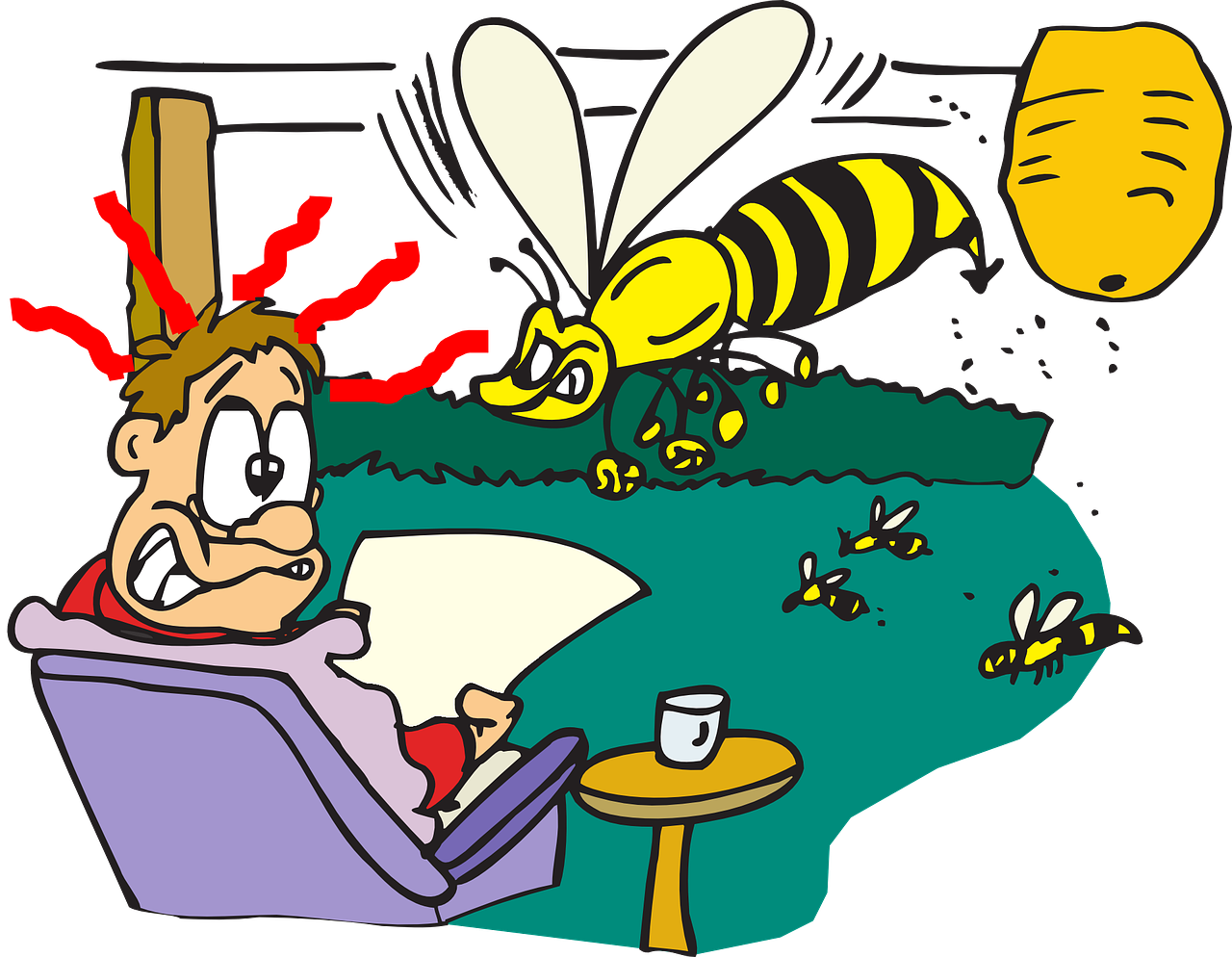
- Heart palpitations
- Higher blood pressure
- Vibrate
- Dizziness
- Nausea
- Flatulence
- Sweat
- Goosebumps
You get the feeling of wanting to run away, but you can also respond by actually sitting or standing completely still.
Sometimes the wasp can also make you think about being stung and how it leads to your death. This can give you an uncanny feeling. As if you are momentarily out of touch with reality.
This phobia can cause you to not take the risk of going outside " into nature" at all due to the intense reactions. This prevents you from enjoying the summer and spring weather like people without the phobia and can even affect your social life. After all, you don't want to go along to that swimming pond, picnic or on that bike ride.
You can also go outside in a very targeted way, for example, only when the weather is bad. Or specifically avoid going to parks or florists.
Cause of wasp phobia
The cause of fear of wasps can be due to several things. The most obvious cause is a bad experience you've ever had with a wasp.
For example, an acquaintance of mine was on vacation as a child. During the trip, they stopped in a public parking lot along the highway. One of those parking lots where the trash cans are overflowing and at every trash can there is a swarm of wasps. It was a bloody hot day and the family had no air conditioning in the car. To give the children some coolness they were all given a cup of lemonade. Such a delicious drink that the wasps liked, too.
So naturally a wasp chased him into the car. On the advice of his parents, he stayed dead still so the wasp would go away on its own, but all for nothing. To make matters worse, the wasp stung him in his lip while he sat neatly still as his parents had told him.
Because of the unpleasant experience of being stung and the feeling of helplessness because he had been stung despite having done everything "right," the fear of wasps had begun at that point. Since then, he prefers not to go on road trips and certainly does not stop at public parking lots or other places where there may be overflowing trash cans.
Incidentally, he also stopped listening to his parents, but that’s another story.
In addition to this kind of experience, parents can also pass on their fear of wasps to their children. For example, if you don’t let your children go outside because there might be wasps, they may adopt this behavior and become afraid of wasps.
Overcoming fear of wasps
There are several ways to reduce a fear of wasps. The most well-known therapy for fear of animals or objects is desensitization. This involves gradually exposing yourself to your fear. If direct confrontation with a wasp is too frightening at first, hypnotherapy can help you visualize the confrontation.
The hypnotherapist can guide visualization, influencing how you respond. Because hypnosis is a state of great relaxation, it is already difficult for your body to get the panic response. So hypnosis allows you to confront your fear in a more rational way.
In addition, your beliefs about wasps can be examined. For example, if you think a sting is always fatal, your reaction may be a bit exaggerated. Depending on whether you have allergies and the location of the sting, a sting can be fatal in very rare cases.
But if you are not allergic, a sting in your leg, for example, is especially annoying. Painful and burning and you may suffer from a large swelling for a few days, but it won't kill you if you are not allergic.
Five people die each year from a wasp sting; the chance of dying in a traffic accident is 100 times greater.
Neuro Linguistic Programming can also be used to reduce or even eliminate your fear of wasps altogether. For example, if you have a distinct thought pattern that causes you to go into a flight or freeze response, Neuro Linguistic Programming can help get your thoughts back in order and disconnect the fear from the wasp. The best part is that NLP therapy can be performed while you are under hypnosis.
Hypnotherapy, for example, is a great way to overcome your anxiety. Thereby, through self-hypnosis, you can also do something against fear at home or at a confrontation with a wasp.
Tips to reduce your anxiety
There’s also a lot you can do on your own to reduce your fear of wasps. That’s why I’m sharing a few practical tips you can try yourself.
Get checked for allergies
For example, if you are afraid of a deadly sting, you can first have yourself checked for allergies, especially an allergy to a wasp sting. Your doctor can then inform you of the severity of a sting in your particular case.
Relax
Even though you certainly won’t die immediately from a wasp sting, the pain and irritation can be severe enough to cause panic when you see a wasp or think one is nearby. To prevent or reduce this panic reaction, it’s important to relax. So take three counts of breath in through your nose. Hold your breath for one count, and exhale for three counts through your mouth. Try to breathe from your abdomen, so your chest doesn’t move, but your abdomen does.
Hang a picture of a wasp
Confronting your fears can cause them to diminish. For example, if you hang an A4 picture of a wasp in your home where you see it often, your anxiety may diminish over time because you often confront yourself with a wasp. Instead of screaming hysterically and running around wildly to avoid being stung, you can then calmly keep your distance from the wasp.
In addition, a hypnotherapist can help you reduce anxiety by having you confront a wasp during a guided visualization. In that visualization, everything goes just right and you remain calm. This increases the chances that you will also be less anxious when you encounter a wasp in real life.
Learn something about wasps
Fear also often comes from the unknown. If you learn something about wasps you understand them better and understand their behavior better as well. It is then easier to properly assess the risks of wasps. You can then more easily determine how to deal with a wasp and when it is really time to leave anyway because he will be in real attack mode.
By learning more about wasps, you may also discover that some of the ideas you had about wasps are not true at all.
Wasp sting prevention
Wasps are attracted to colors and smells. So if you are afraid of being stung despite everything, it is important to wear dark colors that the wasp will not find attractive to investigate.
Also, don't use perfume or deodorant with a fruity scent, as they come to rely on that as well.
Would you like to learn more about hypnosis and what it can do for you or others? Then check out the seminars and training programs offered by the Hypnosis Institute of the Netherlands.
Sign up for the free masterclass on hypnosis to learn more.
Also pin this handy infographic as a reminder.
Sources:
http://www.fearof.net/fear-of-wasps-phobia-spheksophobia/