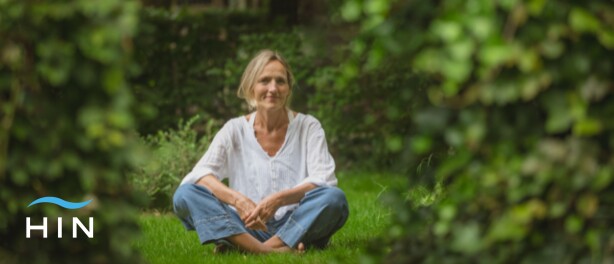
Busyness, stress, anxiety, panic, disorientation, there are all kinds of reasons why you sometimes need to calm down completely. Keeping your composure is increasingly important in this society. I was horrified a while back by the story of a caregiver who had lost it all and flipped out, resulting in deaths. Now this is fortunately not a situation that happens to many people, but everyone can use a calming technique from time to time.
That's why in this blog I'll discuss mindfulness techniques that directly help you calm down in difficult situations.
Mindfulness involves being in the here and now with your attention. In fact, your thoughts can cause you to go completely off the path where you are right now. These thoughts can cause you to lose sight of the future. This is probably what caused the caregiver to freak out.
This can leave you stuck and thinking you're actually not moving forward.
Mindfulness uses your senses, emotions and thoughts to help you live in the here and now. As a result, some techniques of mindfulness also directly help you calm down at a moment's notice.
Technique 1: Breathing through the belly
Breathing through the belly helps you focus on your breathing and calm down. This is because when you are stressed or agitated you often breathe tensely and through your chest. As a result, your breaths are somewhat shallow.
That shallow breathing also means you're not actually getting enough oxygen to optimize all the processes in your body, such as how you think.
Breathing through the belly helps you shift your attention by requiring you to do this very consciously(1). This does require you to think about the here and now, as your breathing in a stressed moment usually does not automatically go through the belly.
Technique 2: Making contact with the soles of your feet
Another mindfulness technique commonly used with children and adults with ADHD in a moment of anger or agitation is to "ground" yourself. You then briefly feel very consciously that the soles of your feet are making contact with the earth.
In doing so, you also use the first technique to calm your breathing as well.
Technique 3: Distance yourself from thoughts
Thoughts can have an awful lot of impact on emotions you feel and tensions you get in your body. Because of thoughts, emotions and tensions, you can even get into a kind of vicious cycle that only makes you feel more tension, anxiety and thoughts.
This is the case, for example, during a panic attack.
This technique is very tricky and for beginners is not always something that can be mastered immediately, as with breathing through the belly and making contact with the soles of your feet.
What you do with this technique is label the thought. For example, you have a thought such as:
"I'm going crazy."
You can label this thought with the emotion fear and with the subject mental state. A somewhat less abstract thought, for example, for a presentation might be:
"Soon I'll forget everything I have to tell."
In this case, the label is also fear regarding emotion and the subject matter is the content of the presentation.
With this technique, you can also use pen and paper. By keeping a kind of journal with this technique, you can find out over time at what times you get the same kind of thoughts.
Then you can then see if you can't handle those moments differently so those thoughts don't come up again.
Technique 4: Mindfulness body scan
The mindfulness body scan is a way to make the contact between your body and mind stronger. The mindfulness body scan keeps you aware of your body and of the here and now for longer. This is because you become more aware of muscle tensions and other feelings that your sensory senses transmit to you.
Especially if you are just starting out with mindfulness, it is important to take the time for a mindfulness body scan. A good mindfulness body scan can last as long as 30 minutes. This can be very pleasant to do for calming down after a busy and hectic (work) day(2).
For a mindfulness body scan, lie down in a comfortable place, such as on a yoga mat or in bed.
Next, you first breathe through your belly to shift your attention to the here and now. Then you start mentally controlling your whole body. You can do this slowly. You start at your toes and feel, for example, whether they are hot or cold. Tense or relaxed. Then if you notice that your foot is pretty much tangled, because you've had the wrong shoes on all day, for example, you can immediately do something to eliminate that feeling. For example, by moving your toes for a moment. Then you move on to the sole of your foot, the top of your foot, your ankles, your calves, your shins, and so you gradually move from your toes to your crown.
With this, the mindfulness body scan helps get all kinds of tension that you don't experience very consciously out of your body. Just getting rid of physical tension can therefore work well to calm down and relax completely.
Technique 5: Mindfulness meditation
Are you way too busy to just lie down for half an hour because you still have all kinds of household chores to do? Even then, you can use mindfulness to calm down. In fact, mindfulness meditation is something you can do while you're busy. It's easy, though, if you're doing something physical , like folding laundry, knitting, vacuuming or some other simple household task.
Advanced practitioners can use mindfulness meditation even during work .
In mindfulness meditation, you stay in the here and now by being with your attention on the task at hand. Again, you also use your senses of touch to "ground" yourself in the here and now. For example, when you are folding laundry, you very consciously feel the fabrics of the clothes.
You may even smell the fresh scent of laundry. For myself, that always makes me very happy.
If a thought still bothers you during such a task and meditation, you can label it with emotion and subject. Then focus back on your breathing and get back to folding laundry. This can also work well for washing dishes and other physical tasks.
Technique 6: Mindful eating
I think lunch at work is a great time for mindful eating. Perhaps you've just had a hectic morning and you'd rather not take that stress and tension into the afternoon. Fortunately, eating is an activity that is incredibly stimulating to the senses and therefore can be great for calming down.
This may also explain why some people suffer from emotion eating.
During mindfulness eating, you obviously pay attention to your breathing, but you also look, smell and taste your food carefully. You chew very consciously and this already allows you to calm down.
In the process, you tend to eat more slowly because you are not distracted and, as a result, you often eat less. In fact, with a smaller amount of food, you already get the signal from your body that you are full.
On the contrary, if you eat too fast, you get the signal afterwards that you are overfull, resulting in abdominal pain. So mindful eating helps to eat less and to calm down and recharge for the rest of the afternoon.
Technique 7: Mindfulness yoga
Yoga is a great way to exercise. This is because it combines breathing with the transitions of yoga poses. You can do the same with mindfulness. Precisely because yoga and mindfulness are so close. Mindfulness yoga helps against depression and anxiety(3).
Mindfulness yoga is not about doing the poses perfectly. It's mostly about feeling how your muscles can possibly make it to even come close to doing a good yoga pose at all.
Mindfulness yoga is a great way to calm down if the mindfulness body scan still allows your thoughts too much. Because yoga also requires you to keep your balance, mindfulness is very important. If you don't pay attention you just fall over.
Other mental techniques to calm down
In addition to these 7 mindfulness techniques to calm down, there are of course many more mindfulness techniques. In addition, there are hypnosis techniques that support calming as well, and even NLP (neuro linguistic programming) can help you with this.
Don't feel that these techniques can still help you? Then it is always important to ask for help. This can also already be done with your primary care physician.
Want to learn more about mental techniques for more calm and focus in your life? Then come to an online master class on hypnosis. Also check out thetraining courses offered by the Hypnosis Institute Netherlands.
Sources:
- https://www.pdhealth.mil/sites/default/files/images/docs/WMHMR_StressOptimization_071318_nonotes_QA_508v2.pdf
- https://www.sciencedirect.com/science/article/pii/S2212657018300618
- https://www.aafp.org/afp/2019/0515/p620.html?cmpid=em_AFP_20190318