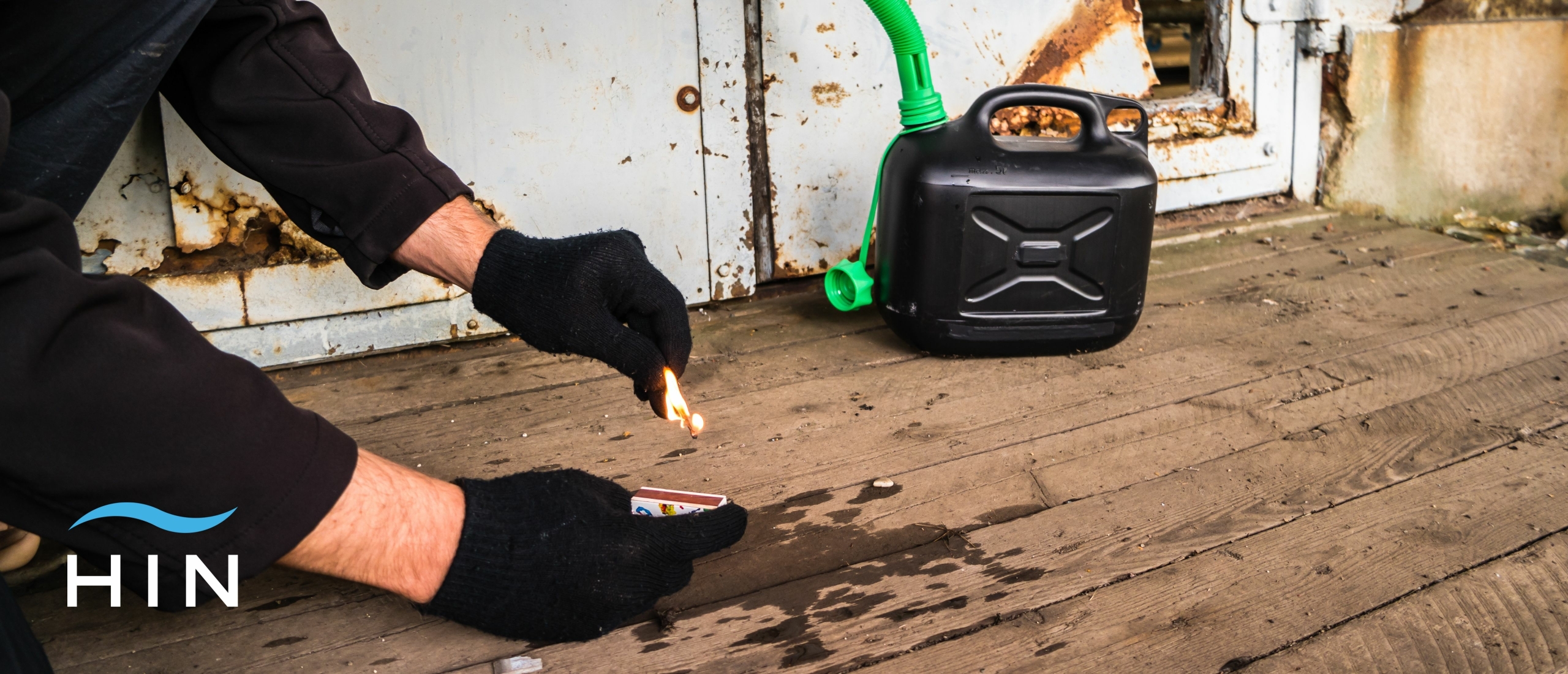

You probably hear on the (local) news that there is a pyromaniac going on. One car after another is on fire, conifers are set on fire and sometimes even an entire house is burning down. That pyromania can be dangerous for the neighborhood is obvious, but how does someone do it anyway and what can you actually do about it? How do you stop yourself when you find that you can no longer control yourself and you have become completely fascinated by fire and the power with which fire can destroy something?
Pyromaniac Meaning
Many people find fire quite interesting. If you're in the woods with friends, a campfire is easily made and around that campfire you can have fun conversations, but in someone who suffers from pyromania, the fascination with fire has become unhealthy.
It has become an obsession and built-up (mental) tension can only be discharged by setting something on fire. This is often the key to the problem of people with pyromania.
Medically, you suffer from pyromania if you have the following characteristics:
- You set something on fire more than 1 time to achieve a specific goal.
- You have tension or excitement before lighting something on fire (anxiety and stress can be reduced for your senses by fire).
- You are fascinated by fire and how it behaves in certain situations.
- You feel pleasure, satisfaction or relief at the sight of fire or the effects of what the fire is doing.
- You don't set something on fire to make money, as an expression of a social ideology, to hide criminal activity, express anger or revenge, to improve your living conditions, in response to a delusion or hallucination, or because you were momentarily out of your mind (such as when under the influence of drugs).
- Setting something on fire cannot be explained as a behavioral problem, manic episode or due to antisocial disorder.
People with this disorder often watch fire nearby, may give a false alarm about fire and derive pleasure from fire-related organizations, equipment and personnel. They may spend time at the fire department, set fires to call the fire department and even join the fire department.
There has also always been much debate about whether this is a disorder, that it is "just" criminal behavior or a symptom of another problem (see items 5 and 6 of the features).
Ultimately, psychiatrists have concluded that this may well be a legitimate mental problem.
Risks and causes
Most pyromaniacs are male and this disorder often develops around age 18. In addition, people are also more likely to suffer from a below-average IQ. Pyromaniacs also reported feeling the urge to set something on fire. The study also found that most pyromaniacs set fires on average every six weeks.
In addition to pyromania, you may also suffer from poor impulse control.
Many people also think that pyromaniacs light fires because it is sexually arousing, but that is only true for 1.5% of pyromaniacs. So really, it is just totally untrue that there is anything sexual about it[1].
Children and adolescents do often set something on fire, but this is often part of a normal curiosity about how the world works. They often do not feel the need to cause something to burn or to provoke a large fire, which is often the case with people with pyromania.
Because pyromania has a lot of overlap with other problems and purposes why people may set something on fire, someone who actually suffers from being a pyromaniac is extremely rare, but so it does exist[2].
Threat of a pyromaniac
If someone threatens you to set something on fire and you know that he/she has done so before, then you can argue that they are not a pyromaniac, because they only set something on fire because of their fascination with fire and not for other reasons. But of course, that doesn't remove the threat.
Perhaps the best thing to do then is to seek advice from the police on how to deal with it.
Alternatives for pyromaniacs
A pyromaniac sets something on fire because it acts as a kind of release for fear and tension. However, fear and tension can be eliminated in ways other than setting something on fire.
It is therefore useful for pyromaniacs to try something different, such as:
- Massage
- Mindfulness meditation
- Sports
- Yoga
- Guided meditation for relaxation
Treatment pyromania
Pyromania is often treated with medication combined with cognitive behavioral therapy. This then helps to stop the urge to set something on fire (source 1).
If you suffer from pyromania, or set something on fire for other reasons, treatment often addresses underlying problems[3]. After all, for a pyromaniac, setting something on fire provides relief after a period of fear or other tension. The source of that fear or tension must then be investigated or eliminated.
They then look at cognitive behavioral training, training social skills (such as asking for help) and techniques to prevent a person from relapsing into pyromania.
If you don't treat pyromania, it can become chronic. If you don't treat this problem and it does go away, it is often replaced by another problem, such as compulsive gambling or abusing drugs (source 3).
In addition, hypnosis can also be used in the treatment of pyromania[4]. For example, there are cases of soldiers who develop pyromania after their service because they actually suffer from PTSD[5]. A problem that can also be treated well with hypnosis.
How does hypnosis help a pyromaniac?
Hypnosis has all kinds of techniques that can help a pyromaniac. For example, you can use hypnosis to figure out why you ever figured out that setting something on fire helps you deal with anxiety and tension.
With regression, for example, you can go back to the time when you first felt that fire was a solution for you for certain emotional problems or stresses.
Then the hypnotherapist helps you view this moment in a different way, making it much less logical for you to see fire as a solution to a problem.
In addition, you can also use hypnosis to replace unwanted behavior (such as starting a fire) with desired behavior, such as going to the gym for a while. This is a technique more commonly used in weight loss, for example, but it can just as easily be used for other problems.
You then visualize the unwanted behavior combined with an unwanted feeling and visualize the desired behavior with a good feeling. You alternate this in your mind until you can only think about your desired behavior and your good feeling. This is something a hypnotist then helps you with.
Relaxation, removing the tension that leads to the urge to set something on fire, is also possible with hypnotherapy. For example, a hypnotherapist can help you visualize a place where you feel completely good, safe and relaxed. You can then do that visualization exercise at home at times when you could use some extra rest.
In addition, your ego can also be strengthened so that you face your life with more confidence and so that you believe more in the healthy alternatives to your problem. This is often done by repeating affirmations during hypnosis. You can even be given repeating those affirmations as homework during self-hypnosis.
These can include affirmations such as:
"Whenever I don't feel good, I go for a workout."
"I may ask for help."
"I can do anything."
"I'm good enough."
These are just examples, depending on your problems with pyromania you may be given other suggestions by the hypnotist to work on at home.
Want to learn more about hypnosis and how it can help people? Then come to a free online master class.
Or enroll in one of Hypnosis Institute Netherlands' seminars or trainings. Training is conducted online from a professional studio and with plenty of assistance for one-on-one attention, so you can absorb the material well.
[1] https://psychiatryonline.org/doi/10.1176/appi.ajp-rj.2016.110707?utm_source=TrendMD&utm_medium=cpc&utm_campaign=American_Journal_of_Psychiatry_Residents%27_Journal_TrendMD_0
[3] https://d1wqtxts1xzle7.cloudfront.net/52277858/355.full-with-cover-page-v2.pdf?Expires=1669741321&Signature=TJ~k2MB7S9t6eV5A41F4RKi-oBmcAc3HpMe2106-yPu9bmMuw3ewyKb4e7wE5JAX~MhScbYHr7nDv9XMFSUBbul3mxed4MTuK-1CNGUHEb6W3R42MLNTh9ziw6KdTc65NKIbDlHGTaF0tUlOaG32vl4myAJTP5nZYLJLL5vHoo97uHahKXgpdE33-PLGTHgFisiWRHpU~tgy5Rn1i2Sk6PHK-NPuFyzayJTHbu0QnOrlkaZMHrkB5-nFftSGW7kpV~n~uHSHSVvpLBJ9HEsmcACTk3FUoqe4ZG4Tp-m5XbNYdhgMp9A5ncYFijk~wnTlsa860lzFAtMDeleRj3L3Lw__&Key-Pair-Id=APKAJLOHF5GGSLRBV4ZA