
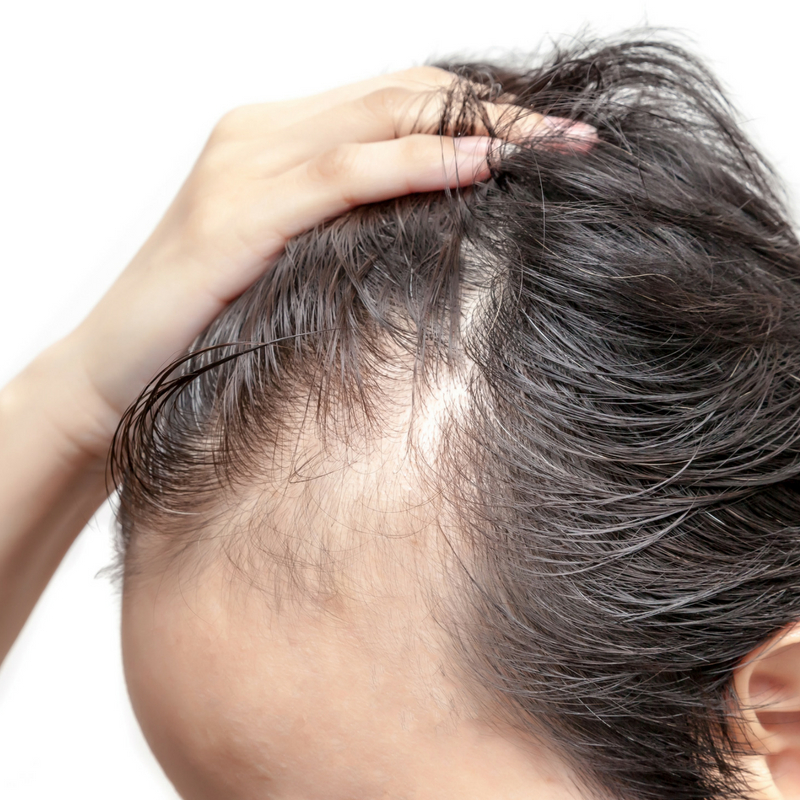

A while ago, I read an article by a woman with alopecia. She had lost her hair all over her body. Fortunately, she found herself beautiful without hair by now, and now went through life open and bare with pride. I thought it was a special story because she also indicated that her hair was always an important part of her identity. The transition to being proud to be bald didn't happen overnight either, but over the years
Still, I imagine you do wish you could quickly accept and be proud of your new look, even if you can't imagine it. That's why in this blog I discuss what hypnosis can do for alopecia.
What is alopecia?
Alopecia is an autoimmune disease in which T cells attack the hair follicles, eventually leaving you with no hair.
There are treatments for alopecia, but unfortunately sometimes it is permanent.
Hair loss begins suddenly and progresses erratically. It can begin with hair loss on the head and body hair, and in extreme cases, the hair can thus be completely removed by the autoimmune disease.
It is not deadly or painful, but it can cause skin irritation.
Many people with this condition hide it by wearing a wig, for example. Something the girl in the article had also done for years, even without telling her boyfriends.
Causes of alopecia
There are only a few causes of alopecia. Either you have a genetic predisposition to this autoimmune disease or the disease is triggered by chemotherapy during cancer treatment.
Sometimes hair grows back, but it is not always of the same color or quality as it was before. Especially if you have hair loss in small places, this can create a special effect.
With chemotherapy, it is normal for hair to fall out, but it usually grows back after chemotherapy. Sometimes the texture may have changed.
When chemotherapy triggers alopecia, however, hair loss can become permanent.
Stress can also be a trigger for alopecia. Women with high levels of stress are 11 times (!) more likely to develop alopecia than women without stress.
Complaints due to alopecia
Alopecia can have an awful lot of impact on your life. 40% of women with alopecia believe it causes marital problems and 63% of women with alopecia say it negatively impacts their career.
This is because it can be psychologically damaging and causes a lot of emotional stress. This in turn leads to social problems privately and even at work.
For example, people with alopecia suffer more from anxiety and depressive symptoms. In addition, people with alopecia often have lower self-esteem, lower well-being and poorer body image than people without this condition.
Alopecia patients who also lose their eyelashes and eyebrows often also have identity issues because eyelashes and eyebrows are an important part of the face.
Because hair is an important part of identity, especially for women, women often suffer more from alopecia than male patients.
Femininity, sexuality, attractiveness and even personality are symbolically more linked to hair in women than in men. Even the concept of who you are can change because of alopecia.
Many women even reported that hair loss was more annoying to them than the loss of a breast in cases such as breast cancer.
The effects are also greater in girls, when the patient is still a child, than in boys. Children with this condition are more likely to be anxious, depressed, withdrawn, aggressive or delinquent.
Dealing with mental health issues
So the mental health issues are not amiss. According to scientists, beliefs about identity and alopecia and the impact alopecia can have on patients also need to be addressed.
According to the researchers, there is a need to build more self-confidence and make adjustments in order to live with the disorder in a good and positive way.
Hypnosis is something that can help with this with excellence. This is also shown in the study Hypnosis and alopecia areata: Long-term beneficial effects on psychological well-being from 2011 by Willemsen and others. In this study, participants received 10 hypnosis sessions over the course of six months. After treatment, people with hypnosis experienced significantly less anxiety and depression, and patients were less emotionally numb. In the process, quality of life also improved.
Hypnosis treatment focused on improving self-confidence, reducing social anxiety, reducing stress (both at home and at work) and reducing feelings of shame.
Before a person receives hypnosis treatment, a conversation is held with the hypnosis specialist. During this conversation, your beliefs about beauty, the influence of hair on it and the influence of alopecia on how you then view yourself are found out.
If you find it difficult to answer this, hypnosis treatment can begin as early as a Socratic conversation. Under hypnosis, you are then asked the why question several times. Doing this while under hypnosis allows you to draw answers from deeper layers of your consciousness that may not come up in the conscious exploration conversation.
Building self-confidence
The beliefs you have about beauty and your functioning in society without it can cause you to suffer from lower self-confidence. Hypnosis can help restore this self-confidence in several ways.
One way to do this is by changing beliefs about beauty. This can be done, for example, by repeating hypnotic suggestions with positive beliefs about beauty even when your hair is not what it used to be, such as:
"I am more than my hair."
"Beauty is something that is defined by my whole body."
"Self-confidence radiates beauty."
These beliefs are just examples. Depending on the problems and beliefs you have about the influence of your hair and the self-confidence you have, you may receive other suggestions from the hypnotist.
You then repeat these suggestions at home during self-hypnosis. To do this, you first relax, focus on your breathing and then repeat the suggestions. By doing this daily, the very beliefs that cause less self-confidence will move more into the background of your subconscious, allowing you to face your life with more confidence.
Confidence in your surroundings may also be diminished by the condition, in which case beliefs about the effects of alopecia are also changed with the hypnotic suggestions, such as:
"My family supports me, even when they don't understand me."
"My appearance does not affect the quality of work I deliver."
Reducing anxiety
To reduce social anxiety, hypnosis usually helps by visualizing social situations and teaching yourself how to stay calm the moment the fear of that situation rears its head. This helps because you then get the memory of the visualization in a real situation and with that you can already calm your body which also prevents the anxiety from rearing its head.
To do this, you will initially learn relaxation techniques, such as consciously relaxing your muscles. This can be done, for example, with a mindfulness body scan.
Next, you get the visualization such as:
"You're at work giving a presentation. You paid extra attention to your appearance and the content of the presentation. All the refreshments and refreshments are ready for the audience. You introduce yourself and tell more about your expertise and then the presentation begins. You are in the flow, everyone is listening to you and you know how to answer every question. You know people are watching you, but that makes sense, after all, you are giving a presentation. You stay calm and professional."
This is just an example of a guided visualization. Depending on your fears, you may receive a different visualization to reduce anxiety.
Adaptation to disorder
When you suffer from alopecia, adjustments may be necessary. For example, many women get eyebrows tattooed and wear a wig. Especially wearing a wig is something women are ashamed of and what many women keep secret.
The adaptation can then be, for example, to have more self-acceptance and to dare to be honest with your environment. For example, many women fear that their partner will not accept the hair loss or will love them less as a result or that a new partner will immediately snap at them.
Hypnotic suggestions and mindfulness are also widely used in these types of cases. For example, by being aware of negative thoughts about yourself, you can intervene in your thoughts much more quickly by redirecting. This combined with self-hypnosis and repeating the suggestions makes it easier to live with alopecia.
Want to learn more about exactly how hypnosis works and how you can help yourself and others with it? Then come to a hypnosis playshop or check out our calendar and sign up for an event.
Sources:
https://onlinelibrary.wiley.com/doi/abs/10.1111/j.1365-2133.2008.09014.x
https://www.nature.com/articles/nm.3645
https://www.ncbi.nlm.nih.gov/pmc/articles/PMC1261195/
http://journals.sagepub.com/doi/abs/10.1177/1359105308097954
https://www.ncbi.nlm.nih.gov/pubmed/21103843
http://journals.sagepub.com/doi/pdf/10.1177/1359105317752826



