
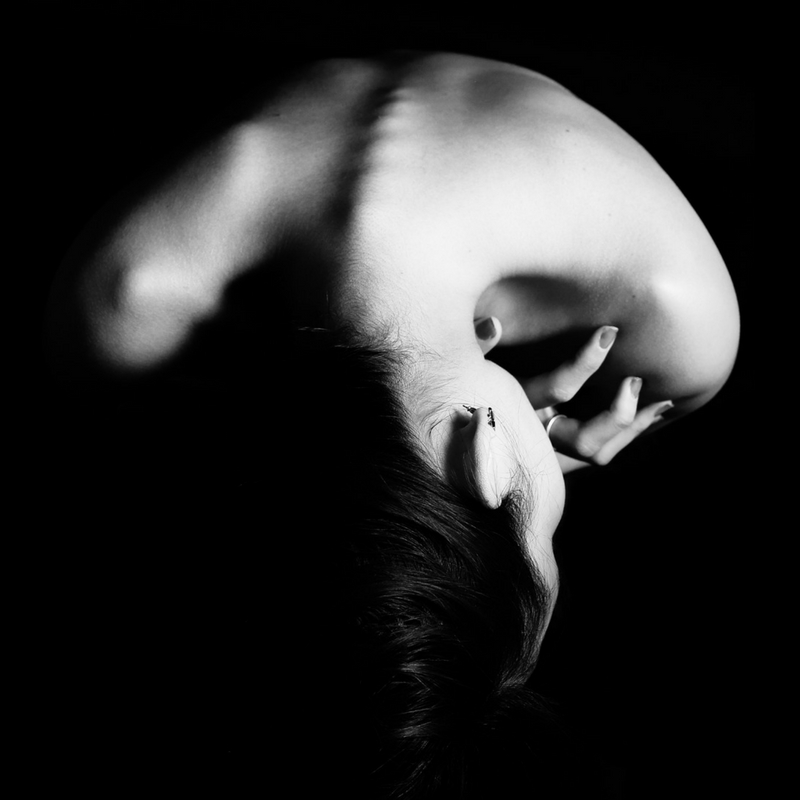

Back pain, not being able to participate properly in sports, a body in an unnatural position, having to go to the hospital regularly and even a metal back to make sure you are "straight." Meanwhile, this has a big impact on your self-image and on how other people treat you. Living with scoliosis is not always easy, but it is certainly possible.
To make it easier to deal with scoliosis, in this article I will discuss current treatments and how to mentally deal with this condition.
Scoliosis
Scoliosis is a condition in which your spine does not grow normally. There are multiple forms of scoliosis and the condition is chronic if left untreated (1).
The most well-known form of scoliosis is that which is congenital. In addition, you can also suffer from scoliosis due to weak muscles, such as from paralysis. You can also get scoliosis from incorrect posture. For example, that posture can be caused by legs that are not the same length.
If you are over 45, you may suffer from degenerative scoliosis. In this case, for example, you suffer from osteoporosis, which weakens your back.
In 20% of cases, it is unclear what causes scoliosis.
Scoliosis treatment in the Netherlands
The earlier scoliosis is discovered, the better the condition can be treated. In the Netherlands, developments are sometimes observed before intervention. You can also get exercises that will help you get stronger muscles to keep your back straight by yourself.
In severe cases, surgery is performed to use pins and other tools to put the shape of the spine into the proper position (as much as possible).
The symptoms you can recognize scoliosis by are:
- Shoulders at odd heights.
- One shoulder blade sticking out compared to the other.
- One side of the ribs appears higher than the other.
- The waistline looks odd.
- One leg may look shorter than the other.
Women are more likely to have scoliosis than men, even from the youngest age.
Scoliosis complaints
If you suffer from scoliosis, you may experience the following symptoms:
- Breathing Problems
- Back Pain
- Fatigue
Pain spine
Pain per se is not a complaint associated with scoliosis. If you do experience pain, it is important to contact your doctor. There may be something going on that needs to be corrected or a nerve may be pinched due to the spine having an unnatural position.
However, if you develop scoliosis later in life, you may experience back pain and pain in the upper legs. This can be chronic pain.
Mental symptoms due to scoliosis
If you grow up suffering from scoliosis, it can have a lot of impact on your life. For example, I know someone who wore a corset in her teens before scoliosis treatment. Because fashion at that time consisted of tight clothing, this was very uncomfortable for her.
Contrary to what was "in" she always wore wide clothes to hide the unsightly medical corset. As a result, the scoliosis kept her from doing all the things normal adolescents do. This also made her feel that it was very difficult to get friends and participate in school activities.
When the corset was finally allowed to come off, it was also a great liberation for her and she could finally do what she wanted. Still, she felt that this insecurity has lingered.
Research also shows that her experience is shared with more adolescents who suffer from scoliosis at that time and need treatment for it. In that group, many adolescents suffer from social isolation, or at least the feeling of social isolation, stress due to facing the disease, and this also damages their self-confidence.(2)
Thereby, these types of symptoms can also occur in people who suddenly experience scoliosis in their adult lives. The confidence you have always had in your body suddenly takes a dent. How would your skeleton suddenly collapse? Almost literally.... A body that suddenly fails you is a body that can undermine your self-confidence(3).
Increasing self-confidence with scoliosis
Suffering from scoliosis can do a lot of damage to your self-confidence. If your scoliosis is so severe that it requires surgery, there is a 50% chance that stress, social problems and other issues that can reduce your self-confidence and return you to your "old" self.
However, if you do not need surgery, or are among the 50% where problems that reduce your self-esteem do not go away after surgery, there is more work to be done. Scoliosis can make you feel like people are giving you a stigma because you're like quasimodo, when that doesn't have to be the case.
So scoliosis can cause you to have all sorts of thoughts that undermine your self-confidence even though nothing bad need have happened in itself in interaction with other people.
A good way to learn to recognize these types of thoughts is to apply mindfulness. Through mindfulness, you also try to mentally live in the here and now as much as possible, which means you are less distracted by unpleasant thoughts about the future or unpleasant memories from the past.
If this proves difficult, you can also use hypnotherapy to ensure that you become more confident. During hypnotherapy, beliefs that stand in your way are sought out and "removed." Through techniques such as neuro linguistic programming or techniques from cognitive behavioral therapy that are used while you are under hypnosis, it becomes clear that a belief may be wrong or illogical so that it no longer stands in your way.
Next, you can be given self-hypnosis exercises, but it depends on the symptoms you have. This can vary from person to person.
In addition, other research also shows that helping other people who suffer from scoliosis, even if it's just telephone support, can have a good effect on your self-confidence and perception of the quality of your life.
Treating depression through scoliosis
Research conducted in Taiwan shows that adults with scoliosis are more likely to develop depressive symptoms than adolescents with scoliosis. The study also shows that people with scoliosis are at greater risk for depression than those who are healthy(4).
Depression is incredibly unpleasant and is often treated with medication, but hypnotherapy and mindfulness can support the treatment of depression making it more likely to be effective or to work faster than it would without mindfulness or hypnosis.
Dealing with chronic pain due to scoliosis
If you suffer from scoliosis later in life, it can also cause chronic pain. This creates additional stress and can be very frustrating. Especially since you are used to a life where basically your body just did what it was supposed to do without too much squeaking and whining.
Chronic pain is very annoying and can reduce your quality of life. There are several ways to help you better cope with chronic pain from scoliosis that developed in adulthood, namely:
- Mindfulness
- Hypnotherapy
Hypnotherapy
There are several techniques you can use hypnotherapy to combat pain and change the experience of pain. One way to combat pain is through a (guided) visualization of a place where the pain is less present. This is also a technique that can be used with self-hypnosis.
During hypnosis, you are first put into a state of relaxation so that you can enter a "trance." Being under hypnosis is sometimes compared by some people to dreaming, but that is not what it is. You are fully present and while you are under hypnosis you are not going to do anything that is against your will. You are, however, more open to suggestions. Because of this, visualization can really distract you from the pain caused by scoliosis for a while.
Mindfulness
Mindfulness makes you suffer less from pain by consciously taking the focus off of it. If you have never suffered from pain and suddenly find yourself suffering from chronic pain, it can cause a lot of stress. This causes you to think about it all the time, and those thoughts can magnify the pain.
By being mindful, you are more likely to notice when you are thinking about the pain and the effect those thoughts have on how you experience the pain. This allows you to intervene more quickly when you recognize that you are magnifying the pain.
You can combine this with self-hypnosis. If you have magnified the pain, you can make it smaller again through self-hypnosis techniques.
Scoliosis, as well as other chronic diseases, can affect your life quite a bit. Fortunately, there are several treatments available to deal with it, and there are also many mental techniques to improve your quality of life.
Want to learn these techniques for yourself or to help other people with them? Then check out Hypnosis Institute Netherlands' training courses or come to a seminar.
Sources:
http://www.scoliose.nl/wat-is-scoliose/soorten-behandelingen/
https://www.ncbi.nlm.nih.gov/pmc/articles/PMC2532872/
http://www.spine-health.com/conditions/scoliosis/scoliosis-symptoms
https://www.thieme-connect.com/products/ejournals/abstract/10.1055/s-0036-1582813