

Lower back or pelvic pain? The lower the pain, the more likely you are also suffering from pelvic pain. The pelvis is actually the large bone in which your back and legs are connected. In doing so, this bone actually carries all of your organs.
So what's going on if you suffer from pelvic pain and the doctors can't find anything? Find out in this blog article.
Where are your pelvises?
Your pelvis is actually the bone of your hips. Women in particular can suffer from pelvic pain. This can have several causes, namely:
- Pain in the genitals
- Lower bowel pain
- Pain in the bladder
- Pain in the pelvic bone
If you suffer from pain around your pelvis, it is important to see a doctor to find out what is causing the pain. Researchers also indicate that if a woman reports with chronic pelvic pain it is important to look at all possible causes and not just parts of the sex, such as the ovaries, uterus and vagina.
Unfortunately, there is also a link between mistreatment, sexual abuse and emotional trauma in people who experience chronic pelvic pain[1]. Relationship dissatisfaction should therefore also be investigated.
In doing so, the pain can also be worse if a woman also suffers from depression.
Even surgery on the gallbladder can affect the development box pelvic pain.
Other causes include:
- Cystitis
- Endometriosis
- Irritable bowel syndrome[2]
- Prostatitis (source 1)
So plenty of reasons to see a doctor before seeking help from a hypnotherapist.
If doctors cannot find a clear cause and yet you have been suffering from pelvic pain for more than 6 months, you are labeled as suffering from chronic pelvic pain syndrome[3].
Pelvic pain treatment
So if something is findable there will likely be a medical solution, such as removing endometriosis tissue or giving medication for a bladder infection.
But don't have something the doctors can solve? Then psychological treatment becomes important.
In the process, people who suffer from pelvic pain are also more likely to suffer from psychological symptoms than those who do not have pelvic pain[4].
This is not surprising either, because if you chronically suffer from pelvic pain, it creates stress and can negatively affect your daily functioning[5].
For example, when you have to sit for a long time, it can make you feel "trapped" in that situation, such as when you have to sit for a long time at work. Or there may be anxiety about having to go to the bathroom when you are in a public place.
In addition, these symptoms can also cause anxiety so looking for certain work, or can hinder you from feeling comfortable "dating"[6].
Usually these types of problems are tackled with cognitive behavioral therapy, but hypnosis can also play a role. It can even accelerate and enhance the effects of cognitive behavioral therapy.
Hypnosis for pelvic pain
Hypnosis is already more commonly used for chronic pain and therefore may also have a role to play in pelvic pain. A meta-study found that hypnotherapy generally works as well as standard treatment and even very occasionally better[7].
Ideal if you do not cope well with side effects of standard treatment.
Sometimes hypnotherapy can also help with pelvic pain symptoms that do have a cause, such as when your bladder is overactive. This can then be given in addition to standard treatment. People who do this report that it is particularly good for their self-confidence about their feelings of control. It improves relaxation, reduces anxiety, and improves the self-image people have in terms of their coping skills[8].
Especially want to get rid of depressive feelings and anxiety caused by pelvic pain? Then even using online hypnotherapy in the form of self-hypnosis may be enough to reduce those symptoms[9].
Hypnosis exercises for pelvic pain
Unexplained pelvic pain can come from all kinds of tension that have lodged in the "hip area" of the body. Anyone who has ever done yoga has probably heard that we hold a lot of emotions in our pelvis and that it is important to open all of that up to release it.
Hypnotherapy can help you achieve deep relaxation. This is generally an important step for hypnotherapy.
A variety of techniques can then be used to reduce/remove pain.
This could include visualization of pain, for example. The person in pain is then given the suggestion to give the pain a color and perhaps even a texture. Then you might get the suggestion to change the color and the texture, to something soft and refreshing, for example.
These types of visualizations can help transform pain so that it no longer bothers you.
A conversation with the body can also be initiated. Many people see an illness or pain as a signal that something needs to change in their lives, or in how they take care of themselves. Especially if the pain is unexplained, it can be helpful to connect with your subconscious.
This is something that can be done with a kind of conversation you have with yourself and your body. That way you can get clear on what your body needs, such as:
- More peace of mind
- Better relationships
- Monitor boundaries better
And things like that. This is all something that can surface during hypnotherapy.
In addition, repeating suggestions aloud to promote relaxation and focus on other things, for example, can help reduce pelvic pain.
These may include suggestions such as:
"I am relaxed."
"I see the beautiful things in the day."
"I feel calm and good."
These are just examples, depending on one's beliefs and problems with pelvic pain, a hypnotherapist may offer other suggestions.
Processing Trauma
Sometimes all the relaxation exercises and visualizations don't help, and then there may be more going on. A traumatic past can also cause pelvic pain.
For many people (women) with pelvic pain there is a history of mistreatment and abuse, then it is important to check if this trauma has been processed.
Processing trauma is often done with regression therapy. What often happens is that people have not had proper "closure" from the traumatic event so there is always some tension in the subconscious because it is not yet "over."
There are all kinds of ways such trauma can be processed. One of my favorite exercises is to take "revenge" in your mind on someone who did something to you. This works better for some people than others.
You can then set someone on fire in your mind, crush them with your car, throw them off a mountain, have them torn apart by the dogs, it doesn't matter what. And at some point, enough is enough and the trauma feels different.
Another way is to enter into a conversation with the offender in your mind and talk about how his or her behavior has affected you. This can work similarly to victims' right to speak.
After all, to your brain, it doesn't matter very much whether something really happened or not, and that helps you process trauma.
Sometimes it is also necessary to have the very conversation with your inner child . To give your inner child the love it missed while growing up. In addition, you can tell your inner child that all is well now and that defense mechanisms and the alertness that the child has been holding are now no longer necessary.
You can show your inner child that your life is much better now than you ever expected, and that can also make it well clear to your subconscious that the traumatic time in your life is over.
Learn Hypnosis
Do you want to help people suffering from chronic pain, or do you want to help yourself? Then knowledge of hypnosis is indispensable. Come to our free master class for an introduction.
Request the free MP3 to experience self-hypnosis with an audio recording.
Want to know more? You can also register directly for one of our events and trainings. There you will also get demonstrations of hypnosis and the various techniques. You will then see immediately how quickly a transformation can take place.
Click here for our training courses.
If you have a question about our training, schedule a free 1-on-1 consultation here.
PS: Also support our petition for hypnosis in mental health care.
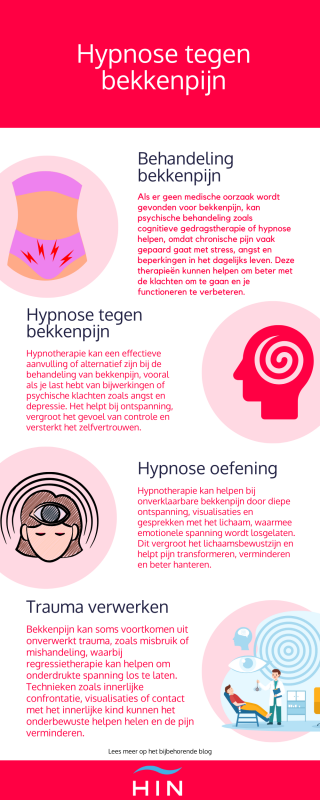
Also pin this handy infographic as a reminder:
Sources: