

Hypnotherapy began to emerge in the Netherlands in the 1980s and has evolved to this point. The point where hundreds of people want to learn hypnotherapy.
I give a hypnosis seminar and then you're in a room with 200 to 300 people who want to learn hypnosis and it's great. I don't even know if this happens further in the world, I don't think so. So I feel like that's when we set a record and make history.
When I'm in front of the group and I watch it, it's super to see. Everyone goes full steam ahead. A really good energy. Super much love and favor. We have so much fun during such a seminar.
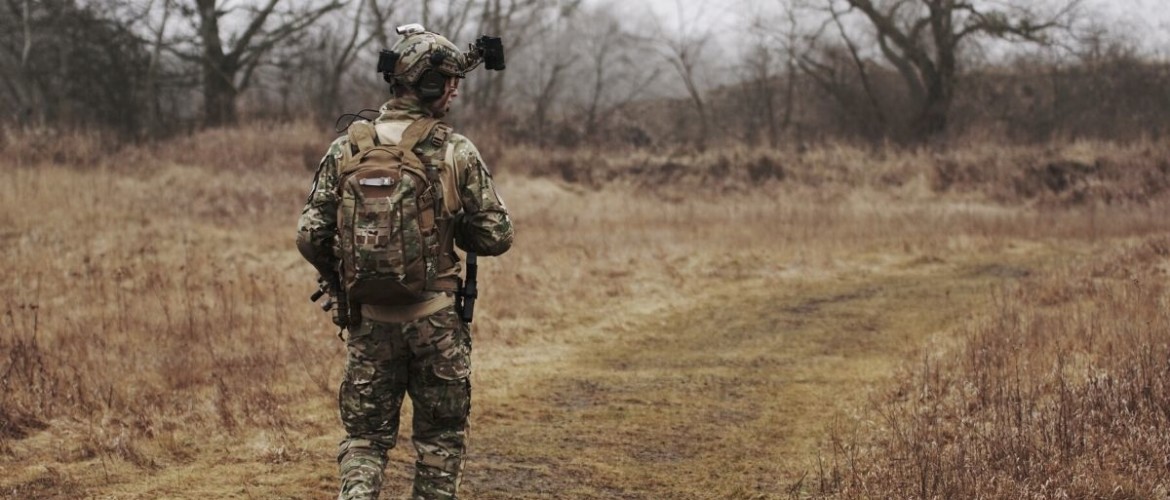
I often do a demonstration. For example, I once did a demonstration with someone who had been traumatized for 35 years by a mission for which he had been deployed. I got about 40 applications for the demo. He was actually the first one I drew a line at and said to myself, "I'm not going to do that one."
Someone has been traumatized for so long and then you just want to "fix" that with a demo in front of a group? I was very doubtful that I could do that. So I wasn't going to do that one, there were plenty of others.
So I was busy and then a coach came in. He saw him on the list and said, "Oh, is he on it. Yeah, him you should do." And all the other coaches who came in said the same thing.
Bart, a coach I trained, hypnotized me and told me to do it. He said the guy said this morning "I'm here in the seminar day 2 and I thought I'll drive back and the moment I wanted to drive away something in me said 'no man, this is an opportunity'".
Then I also thought, "Yes, of course I have to respond to that, so it has to be."
35 minutes to eliminate 35 years of suffering
So we did the demo. Which was very intense. It wasn't very long either. Between 30 and 35 minutes. After that, the whole feeling of fear was gone. The sounds in his head were completely gone. He found this very special because he had been on therapy and medication for 35 years and so after the demo it was completely gone.
This touches you then. A feeling of "how cool that you were able to help this man in this way," but it also touches me on another level. That you wonder why he wasn't helped in this way before.
This is why I think it is so important that many people can apply hypnotherapy.
Because 35 years of not being able to work, always being afraid and then being freed from something like that all at once is just crazy. At the same time, it frustrates me that within closed organizations like defense, mental health and psychiatry, there is little room to introduce treatment methods that just work better.
For him, this is a step in the right direction, he is just going to live his life. We did offer him aftercare, he will be in the aftercare program. Because when it's gone, you can ask yourself, "Now what?" So we're helping him with that now.
That may be the most important thing. I do believe in getting results within a session, but that doesn't always mean the result is useful for the future.
Effect of achieving results within a session
In fact, you are going to realize two things.
- "Shit man, what am I supposed to do with all this freedom?"
Now you might say that someone will fill that out on their own. But if you're not used to it, this is not always the case.
- "Why haven't I done this before or been done this before?"
Then you can get depressed about it, too. So the sessions after are important to fill out your future and prevent you from getting depressed.
I hear many hypnotherapists say that you can get rid of it with one session. This I believe, but what are you going to do? What will you do when your original problem is gone?
If you don't know, you immediately have a new problem. If you don't know how to proceed with your life. For example, if there were all kinds of gains to the disease and that was the only gain in your life. That's gone then, you would have been better off keeping the problem.
One session produces results. This is always true, but is this the desired result?
You should always take care of that. This doesn't have to take years. A few (maybe five) sessions after, such a person is back on track.
It amazes me then that 1 35-minute session is more effective than the 35 years of coaching. If just one person in those 35 years could do what I can, or what my trainers can teach that person, he probably wouldn't have been in the shit all this time.
How many of those people are now walking around traumatized?
Also listen to this podcast.
https://www.buzzsprout.com/195236/1288063-het-hypnose-seminar-kreeg-een-aparte-wending
Anyway, I find giving seminars so cool and am so grateful for it. I also hear extraordinary things from many people. If you think "I want to experience this too," come to a hypnosis seminar.
Trauma and the science about hypnosis
Now you may be thinking, "Yeah, but this is just one person? Who says hypnosis always helps someone with trauma?"
Scientists indicate that hypnotherapy is undervalued. This is because hypnosis has an individual approach. Not everyone gets exactly the same treatment. This is why it is so difficult to get general figures on the effectiveness of hypnotherapy.
In the process, hypnosis allows you to access certain memories faster, as suggestions can eliminate feelings of shame about that memory.
Hypnosis also helps to process traumatic events in a less destructive way. In doing so, it also helps improve client safety between sessions[1].
Research among women with fibromyalgia also shows that under hypnosis you can more easily access memories of traumatic events [2]. This helps you resolve the trauma.
Releasing trauma with hypnosis
To resolve trauma, anything is possible. For example, letting go while under hypnosis. You can then view the moment from a different perspective than you normally do. This is something the hypnotherapist helps you with. Then you can get all kinds of new insights that replace the old information, because you just get too much new information for the older information about the trauma to exist[3].
This is something you do with regression. With regression, you go back to a traumatic event. Then you are going to change it in your mind such that it no longer has the effect on you that it always had.
You can do this in multiple ways. For example, you can empathize with the people who were also present during the traumatic event. Then you explore why they do what they do and what they think in the process. This works better for some traumas than others. If someone did violence to you I can imagine that this is not helpful, but if you witnessed violence this might help. For example, if your parents fought when you were little.
Is the above not an option for you? Then perhaps you can imagine your current you walking into the situation and taking you out of there or defending you. Your hypnotherapist will help you with this.
In addition, you can also imagine in your mind that the whole situation went differently than it actually did. For example, you can make something very comical, which makes the power of the memory much weaker and the trauma becomes that too.
Aftercare for a life yes trauma
As an aftercare, you can receive homework - in addition to suggestions. For example, you get an mp3, which your hypnotherapist has recorded for you, to listen to at home for self-hypnosis.
This ensures that you won't have relapses between sessions.
You can even then be instructed to repeat certain affirmations in hypnosis. Those affirmations are repeated on a person-by-person basis. The hallmark of all affirmations is that they are positively stated. So no denials or things you don't want, but acknowledgements and things you do want, such as:
"I am strong."
"I can do anything."
"I'm social."
"I am brave."
These are just examples. Depending on your trauma, you may be given other suggestions.
Want to learn more about hypnosis and find out if you can be hypnotized? Then come to a hypnosis playshop. The playshops are held in Wormerveer and Zwolle.
Just want to see a demonstration of hypnotherapy? Then come to a seminar.
Want to learn the techniques to help yourself or others? Then enroll in one of the training courses of the Hypnosis Institute Netherlands. The trainings are given in Wormerveer, Zwolle and online.
[1] https://www.tandfonline.com/doi/abs/10.1080/00029157.2016.1163659
[2] https://www.tandfonline.com/doi/abs/10.1080/00207144.2018.1396104
[3] https://nvvh.com/wp-content/uploads/2015/04/From-the-influence-of-traumas-to-therapeutic-letting-go.pdf (page 358)



