Meditation against depression: A supportive role
A black hole, the feeling that nothing matters, or at least that you don't matter. Misunderstanding and arguments often result when people don't understand that something is wrong mentally. Depression can take over your entire life. Your emotions, your thoughts and even how you do the things you would normally do. Everything can change because of it and sometimes it seems like it won't go away. It can make you very upset.
Therefore, in this article, I discuss how depression is treated and how meditation can play a role in it.
Depression
Everyone experiences a low point now and then, but you can truly speak of depression when the symptoms persist for more than 2 weeks. Depression can strike from time to time. Sometimes you feel fine, and then suddenly you’re in the worst slump ever—and “slump” is an understatement. A depressive episode can last up to two years.
Postpartum depression
Postpartum depression is a depression that women can have after the birth of their child. It does not matter if this is the first child, or the tenth child before the onset of this form of depression. It is normal in itself to feel a little anxious about new motherhood in the first two weeks after giving birth, but with postpartum depression this does not stop and the symptoms are often more severe, for example you are also very sad and in addition to the anxiety you suffer from severe fatigue.
Chronic depression
Chronic depression is often less severe than temporary depression, but just as distressing. With chronic depression, you often experience feelings of inferiority, hopelessness, and difficulty concentrating. In addition, it can be difficult to find joy in your life.
People with chronic depression suffer from it for more than 2 years, and some even report never feeling anything but that.
Symptoms of depression
Recognizing depression can sometimes be tricky. To find out if you have depression, see if you recognize yourself in the following symptoms:
- You're usually in a bad mood.
- You are easily irritated.
- You have trouble sleeping or, on the contrary, sleep too much.
- You are tired and lacking in energy.
- You have a sense of worthlessness.
- You hate yourself.
- You often feel guilty.
- You have trouble concentrating.
- You move slow or very fast.
- You undertake few activities or at least less than before depression.
- You feel hopeless and helpless.
- You often think about death or suicide.
- Activities you liked before don't like anymore, including sex.
If you recognize many symptoms of this and they last longer than 2 weeks in a row, chances are you have a form of depression.
Cause depression
The cause of depression is not always clear, but depression often runs in the same families. This may be due to genes or learned behaviors. Stressful or emotional events in your life can also trigger depression.
In addition, prolonged stress can also lead to symptoms of depression. Often, you don’t notice this until you reduce the stressor. It can feel as if you’ve been walking around for a long time with a kind of gray haze weighing you down, but you only realize this once the cause of the stress has been removed. Suddenly, you notice that colors are much more beautiful and that you feel lighter on your feet than you have in years or months.
If you recognize the gray haze and odd weight even before you have eliminated the cause of prolonged stress, that is one of the first causes you can try to identify.
In addition, alcohol and drug abuse can also trigger depression or be a symptom of depression.
Depression treatment with meditation
Depression is often treated with cognitive behavioral therapy or medication. In addition, hypnotherapy is also used to treat depression, and the possibilities of meditation are being explored.
Cognitive behavioral therapy involves looking at how to deal with certain thoughts and how to change those thoughts.
Medication mainly affects serotonin which is important for feeling good. But medication can have unpleasant side effects. Oddly enough, suicidal thoughts can be a side effect of antidepressants. This does not always happen, but then it is extra counterproductive ( 1).
Hypnotherapy addresses the subconscious mind and the beliefs that cause a person to feel inferior.
Meditation can also be used against depression. This is because meditation is a way to discover yourself and do something about negativity that often gives the depressive symptoms.
Mindfulness meditation against depression
Meditation can also change thought patterns. A negative spiral of thoughts can be broken using meditation techniques. This has been studied, among other groups, in students preparing for careers in healthcare. Working in healthcare is one of the most demanding jobs you can have. As a result, students may already experience anxiety and suffer from depression. Mindfulness meditation was particularly effective in reducing anxiety, which can already provide relief from some symptoms of depression ( 2).
Meditation and aerobics against depression
You can also combine meditation with, for example, aerobics to reduce the effects of depression. In a study in which people with severe depression were asked to meditate for half an hour twice a week and do half an hour of aerobics immediately afterward, it was found that after 8 weeks, the participants experienced significantly less depression ( 3).
The meditation consisted of focused attention meditation. In such meditation, you focus your attention on 1 thing and stay focused on it. This can be an image, an environmental sound, it can be anything, but your focus is kept on that.
If you notice a thought distracting you let it go by bringing your mental attention back to the point of focus. If you find this difficult you can take training sessions for this, but you can also start small instead of starting immediately with half an hour. For example, you can first focus on something for 5 minutes and if that goes well you move on to 10 minutes until you reach 30 minutes after which you do aerobics.
If you prefer not to do this in a group, you can also find many videos of half-hour aerobics on the Internet.
These exercises actually change the connections in your brain and its activity. As a result, you gain more control over your thoughts and suffer less from memories that make you feel negative.
Transcendental meditation against depression
A study of staff at a school for children with behavioral challenges shows that Transcendental Meditation can help alleviate depressive symptoms ( 4). In this case, the teachers were instructed to practice Transcendental Meditation twice a day for 15 to 20 minutes. After four months, there was a significant difference in the severity of depressive symptoms and burnout symptoms. This means they were less affected by them.
In transcendental meditation, you sit cross-legged
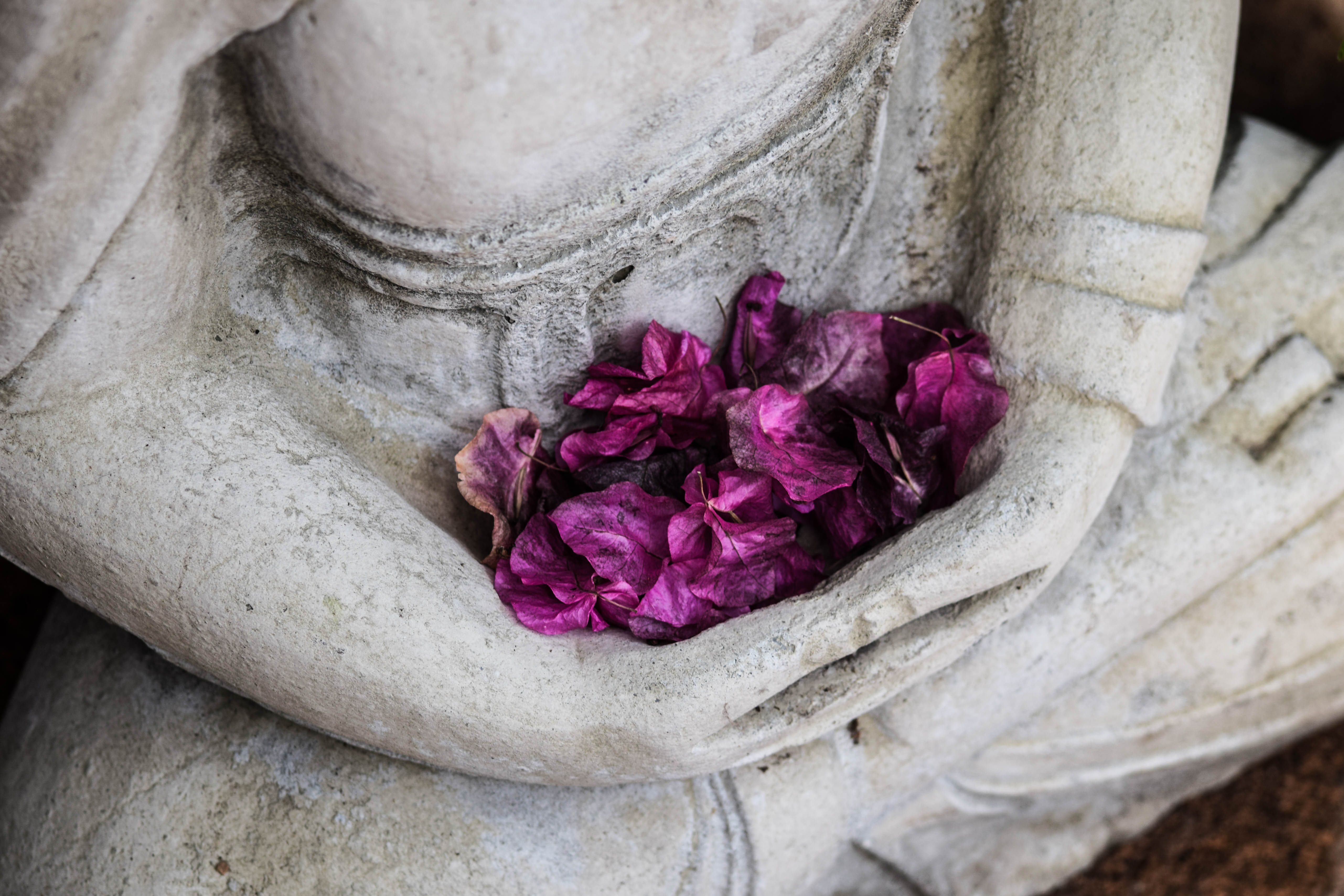
The idea is that your attention goes inward through this exercise. You then become aware of your body and any thoughts that still spring up.
Walking with meditation against depression
Research also shows that walking and meditating at the same time helps reduce depression ( 5). In this study, 45 people aged between 60 and 90 walked for half an hour three times a week and meditated during the walk.
This means that during the walk, you are with your attention on the walk and not letting your thoughts go in all directions. You are aware of the steps you take, your breathing and your surroundings.
If you find that your thoughts are still going in one direction shift your attention back to the soles of your feet as you walk and your breathing. You do not have to control your breathing in this process, but rather be aware of it.
This meditation walk was compared to a regular walk and its effectiveness against depression.
Walking alone did have a good effect on participants' cardiovascular health, but depressive symptoms did not go away. While the group that meditated while walking did have a significant decrease in depressive symptoms and also improved physical health.
Walking and meditating is therefore a good way to reduce depressive symptoms.
So there are an awful lot of ways meditation can help make depression go away or at least reduce symptoms. This is great news for you if medication actually has counterproductive effects on your mental state.
Would you like to learn more about mental techniques to improve your quality of life? Then come to a seminar or check out the training programs offered by the Hypnosis Institute of the Netherlands.
Sources:
https://www.nimh.nih.gov/health/topics/depression/index.shtml
http://www.sciencedirect.com/science/article/pii/S0260691708001792
http://www.nature.com/tp/journal/v6/n2/abs/tp2015225a.html
http://www.thepermanentejournal.org/files/Winter2014/TranscendentalMeditation.pdf
http://online.liebertpub.com/doi/abs/10.1089/acm.2013.0205