Supporting epilepsy treatment with hypnosis
Epilepsy is a disease in which you can have seizures that cause you to shake uncontrollably, including losing consciousness. It is important that bystanders put someone in a stable position during such a seizure so that the person cannot choke on their own mucus. During an epileptic seizure, it is almost impossible to breathe, which is why a seizure can be very dangerous to the health of your brain. It can even be deadly.
In this article, I discuss what epilepsy is and what support hypnosis can provide to treatment.
What is epilepsy?
Epilepsy is a neurological disease whose main symptom is the epileptic seizure. If you are standing you fall over during such an epileptic seizure and start shaking uncontrollably. I described in the introduction that an epileptic seizure is dangerous because it makes it very difficult to breathe, but that is not the only danger. Because you fall, you can land unhappily which can cause you to break something.
For example, I know someone who landed nastily on the opened dishwasher and broke his jaw as a result. Of course, this could have ended much worse. Fortunately, this person very rarely has an epileptic seizure, averaging once every 3 years, but there are also people who have monthly, weekly, daily and even several times a day epileptic seizures.
Such an epileptic seizure occurs when the cortex of your brain suddenly has abnormal activity. This is the outer layer of your brain. This can also explain why you suddenly start shaking uncontrollably, because your brain then transmits that signal to the muscles.
This part of the brain is also responsible for your consciousness. If that part no longer functions properly, it’s not surprising that you temporarily lose consciousness—a characteristic of an epileptic seizure.
The causes of epilepsy
Epilepsy can have multiple causes. In rare cases, for example, people have a genetic predisposition to epilepsy. But most often, the cause can be traced to a brain injury, a stroke, a brain tumor, a brain infection, or a birth defect. Such an abnormality can develop as early as the fetal stage and is therefore not necessarily caused by a difficult birth.
In some cases, you can also have a seizure due to excessive alcohol consumption or an electrolyte imbalance, but that does not mean you have epilepsy.
In fact, if you have epilepsy, you can simply have an epileptic seizure without any prior warning or obvious cause.
It’s actually very strange, but imagine you’re just having a conversation with someone, and suddenly they fall over and start shaking violently. You’d have absolutely no idea why that’s suddenly happening, and even though we’d like to see a cause-and-effect relationship, it really isn’t because of anything you said. There is, however, growing evidence that stress, lack of sleep, and alcohol consumption increase the risk of a seizure in people with epilepsy.
Only 6% of people with epilepsy have a cause, such as flickering lights and sudden noises. In that case, it is also referred to as reflex epilepsy.
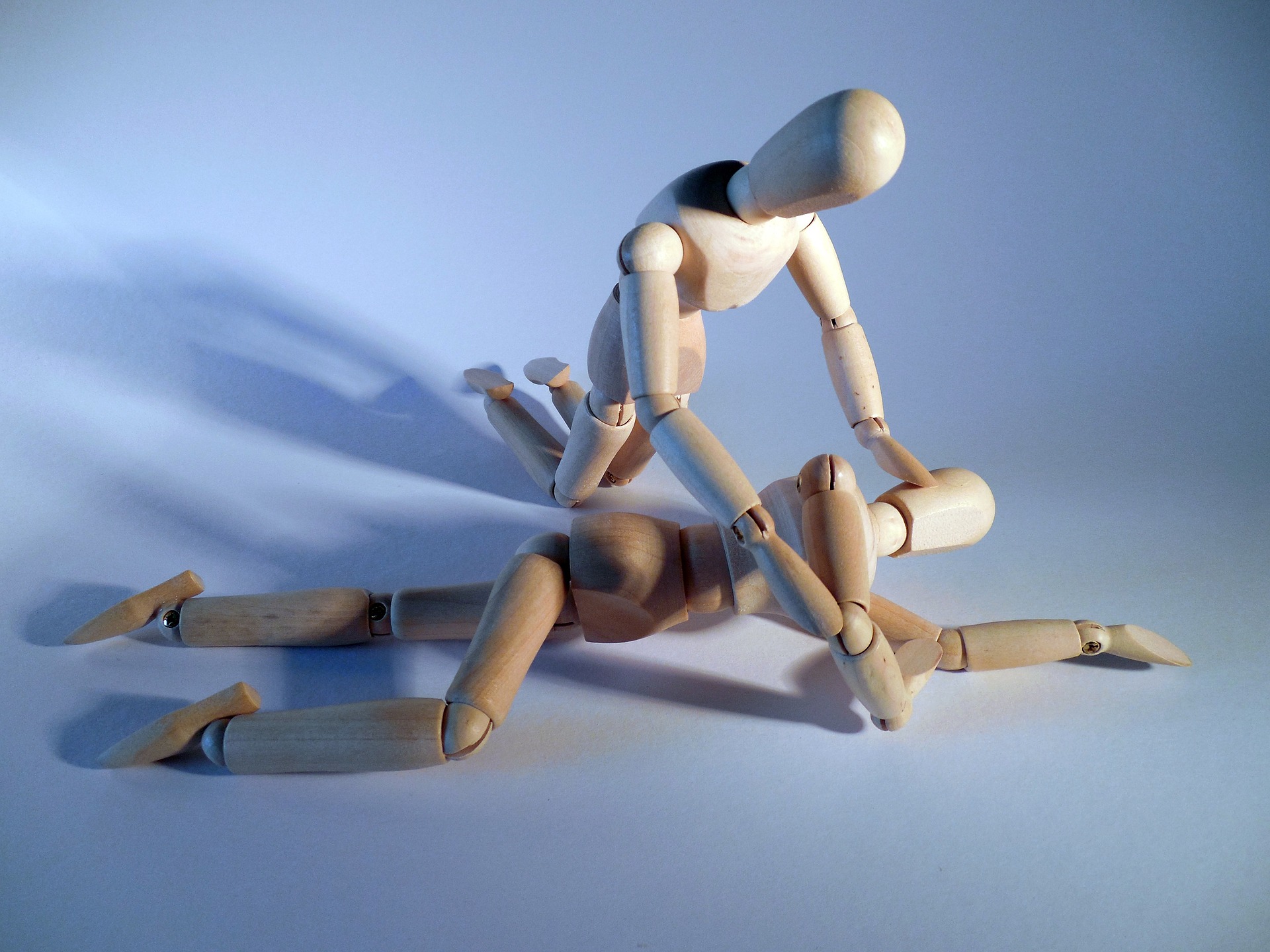
If someone around you has an epileptic seizure, this is not the time to panic, but to lay him or her on their side and place a pillow or something else soft under their head. You should move anything in the vicinity that could injure the person out of the way.
Treating epilepsy
Unless it is ruled out that your epilepsy was caused by an electrolyte deficiency or alcohol abuse, epilepsy is generally treated with daily medication. This is effective for 70% of people with epilepsy (2).
If it doesn't work, surgery can still be done, often removing tumors if they are the cause or even parts of the brain. Sometimes a neurological stimulus is also given to get everything working as it should again.
Dietary changes can also be helpful. A ketogenic diet reduces seizures in 30–40% of children with epilepsy. This involves eating plenty of fat, protein, and vegetables, but very few carbohydrates and sugars.
Avoiding triggers, such as bright lights, is also a way to reduce the number of epileptic seizures. You can then get special glasses for this purpose.
Supporting epilepsy treatment with hypnosis
Hypnosis can support epilepsy treatment in several ways. First, it can be helpful even during the diagnosis of epilepsy. After all, a seizure can also occur even if you do not have epilepsy. Hypnosis can help determine whether you retained some level of consciousness during such a seizure or were completely unconscious (3). If you were completely unconscious, it is indeed a case of epilepsy.
Scientific research shows that it is as reliable as an EEG scan.
Hypnosis can help reduce seizures
Hypnosis can also help reduce seizures in multiple ways. A scientific study of people who did not respond to medication found that aromatherapy combined with hypnotherapy had the best effect in reducing seizures.
In this study (1), 100 people participated who were eager to take advantage of the opportunity to test this approach. After two years, a follow-up was conducted to assess the treatment’s effectiveness. The treatment consisted of aroma therapy and hypnosis sessions every two weeks. If there was no improvement after six sessions—that is, after three months—the treatment was discontinued. Otherwise, it continued as usual.
This study found that out of 100 people, 38 had not had an epileptic seizure after 1 year and 31 had had at least half as many seizures as normal. For 25 people, aromatherapy and aromatherapy had had no effect.
The reason this effect can be achieved is because aromatherapy and hypnotherapy help reduce stress. Stress can be a cause of an epileptic seizure. Hypnotherapy can also improve sleep. A lack of sleep can cause an epileptic seizure. So improving this again lowers the chances.
Indirect symptoms due to epilepsy
Epilepsy can also lead to stigma. For example, people may be reluctant to hire someone with epilepsy out of fear of workplace accidents. Or people may hold all sorts of superstitions about those with epilepsy. This can lead to the development of other issues, such as depression. Of course, it’s not nice to be rejected because of something you can’t control—and that might not even cause problems because you’re on the right medication.
Hynotherapy can help you get tools to deal with these problems differently so that you don't suffer from depressive feelings, or at least suffer less.
If you have gone wrong once, you may also suffer from anxiety and also because of the social environment that may react incorrectly to it. Hypnotherapy is often used to reduce anxiety.
Some people with epilepsy also suffer from obsessive-compulsive disorder (OCD) in that it provides a sense of control. This can eventually get in the way of your life quite a bit. There are treatments for OCD as well, such as cognitive behavioral therapy enhanced by hypnosis.
In addition, epilepsy can also make you suffer from migraines and ADHD.
Using self-hypnosis alongside hypnotherapy generally enhances the effects of hypnotherapy.
Having stress treated for epilepsy
There is still no clearly identifiable cause for an epileptic seizure, but there are indications that stress, lack of sleep, and alcohol consumption can increase the risk of a seizure in people with epilepsy. Flickering lights can also trigger seizures in some people with epilepsy.
As I mentioned, stress is a major factor that can cause epilepsy. This doesn't just have to be stress at work. Stress from your personal life can also cause you to have an epileptic seizure. While checking moments when you suffer from such a seizure, you can find very strange reasons. For example, there is a case known to me of someone who suffered such a seizure every time he moved in with his (new) girlfriend after a few weeks.
In 70 percent of people with epilepsy, seizures can be suppressed with medication. The other 30 percent may benefit from an aroma with hypnosis therapy. This can help because it reduces stress and can improve sleep.
In addition, hypnotherapy can be a solution for the indirect consequences of epilepsy, such as depression, anxiety, and OCD.
Would you like to learn more about hypnotherapy? Be sure to check out the courses offered by the Hypnosis Institute of the Netherlands.
Sources:
http://www.sciencedirect.com/science/article/pii/S1059131103001614
http://www.ncbi.nlm.nih.gov/pubmed/21206438
http://onlinelibrary.wiley.com/doi/10.1111/j.1528-1157.1999.tb00745.x/abstract