
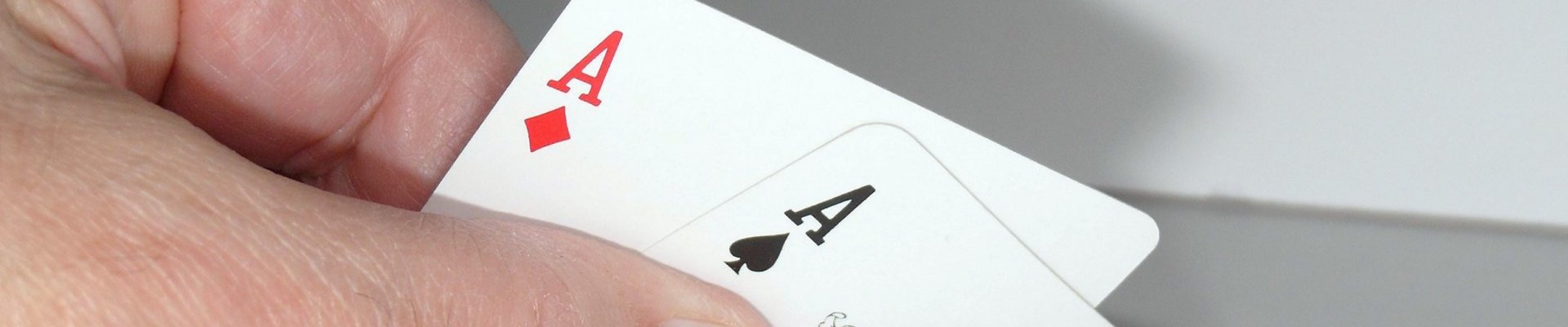

Risk-taking is part of life. Every time you make a choice you take a certain amount of risk that the consequence of that choice is not what you expected. Sometimes you can be disappointed in the consequence of your choice so many times that you have become risk averse. You no longer want to take a risk. This can cause your life to grind to a halt, though, and your world can actually get smaller and smaller. That's why in this blog I'm going to discuss reducing fear of taking risk.
Definition risk
What exactly is risk? Risk is actually the probability of danger. The chance of something negative happening that results in harm.
You have all kinds of risk. For example, when you go cycling you run the risk of falling. This is a kind of health risk. If you go investing or gambling you run the risk of losing your money, which is a financial risk.
Own risk
When you talk about your deductible, it's often about the deductible you take with your health insurance. You have a minimum amount of your deductible that is set each year by the government.
Then you can often choose to increase your deductible. To do this, you make the trade-off: "Am I going to break my leg or something this year or not." If you increase it, this often lowers your monthly premium. So if you have a very boring life, without motorcycling, cycling or winter sports, it can be financially interesting to increase your deductible.
So taking a little extra risk can make you money every month, but it can make sure that if something happens to you your profits disappear because suddenly you do have to pay a $500 bill instead of about $300. It depends on your own assessment of your health.
Risk Management
Then you have risk management. This is often viewed from businesses or work.
For example, you have certain insurances to reduce financial risks at work. This of course costs money, but if something goes wrong (staff fall ill or the like) this also prevents you from having to spend an awful lot of money all at once.
Yet in businesses, you shouldn't want to take no risk at all either. In fact, risk-taking makes innovation more likely[1]. Innovative ideas and developments within the company result from someone taking the risk to do things differently for a change.
Taking risk for your development
There are a number of reasons besides the financial reason to take risk, namely:
- Personal Growth
- Emotional connection
- Control[2].
Risk-taking is often seen as something to be avoided. This can cause you to live in fear. When fear dominates your life, however, your world becomes smaller and smaller.
One way to reduce your fear of risk and the world is to increase your sense of power. Research (1) shows that if you have a higher position of power you perceive the world as safer than if you have a lower level of power.
Taking risks more often and finding out that the risk is not that great can improve your sense of control and thus power, which in turn reduces your anxiety. In doing so, it can make you feel more in control of the course of your life and that by taking a risk you can ensure that you live less on autopilot and lead a more conscious life.
So risk-taking also builds courage, and taking risks more than 1 time can make you feel more unique, such as when you make skydiving your weekly hobby.
How do you take more risk?
So risk-taking can have positive (and negative) effects on your finances, business development and personal development. Therefore, it can be quite helpful to take more risk from time to time, especially if you are currently living entirely on autopilot.
But how do you start taking more risk? Why not actually take more risk right now?
To figure out why you are not taking more risk, it is important to consider how you believe the world works and how you can function in it. Figuring out your beliefs can be done in several ways. For example, hypnosis can help you with a Socratic conversation or regression.
Especially if you are risk-averse, it is important to consider when this started. When did the belief arise that risk-taking is a bad idea. This is something that is found out with regression.
With regression, you go through the last moment that you felt like especially not taking a risk and run through time to the very first moment. Then your hypnotherapist will help you to look at that moment in a different way, causing the conviction to lapse, so you are no longer inhibited from taking risks.
But sometimes just removing your inhibitions is not enough; encouragement is also important. In that case, hypnosis can also help, by giving you new beliefs after removing your blocking beliefs.
You can do this by powerfully repeating certain phrases while under hypnosis, such as:
"An adventure helps my development."
"I can do anything."
"Risk creates new discoveries."
"Risk creates more control."
These are just examples of such suggestions. Depending on your beliefs and risks you are more willing to take, a hypnosis expert can give you other suggestions.
Plan B for taking risk
Taking a risk is fun, but you can make it safer by coming up with multiple plans that fit the possible endings of taking the risk. This already makes it a lot less exciting to do things differently.
So you may take the time to weigh the risks and determine how to respond to possible consequences.
To calm you down completely, a hypnosis expert can help you with this and help you with a guided visualization on how taking the risk will go and how you react in case of multiple consequences. So you can get multiple guided visualizations in order to have less fear of risk taking.
For example, you want to propose a new idea at work during a meeting. You don't often do this because you fear your idea will be rejected, but how bad is this really? With your hypnosis expert, you determine what you can do to respond when your idea is rejected, such as "I will look for improvements for my idea." Next, you visualize the meeting. How it feels, how you feel and how you relax as you present your idea to your fellow meeting members. By visualizing all of this and how you remain calm at the time you take such a risk and how you can react if it doesn't turn out as well as hoped, it becomes a lot easier to do risk taking.
More opportunities in your life
Taking more risk will give you more opportunities in your life. For example, if you know yourself to be almost never sick and have good savings, you can increase your health insurance deductible so that you have more to spend each month. This in turn can open up room for other opportunities in your life.
By taking risks, you can develop yourself. You find out that you can do more and handle more than you may have expected of yourself. As a result, you become stronger.
At work, risk-taking can create a lot of admiration. So much admiration that it can make for more pay. For this, it doesn't even always matter whether you own your own business or are employed. Risk with a good outcome is rewarded.
Hypnosis can help you take more risks. Figuring out your blocking beliefs can already open up a world for you. In addition, there are hypnosis techniques that can encourage you to take more risk.
Want to learn more about how hypnosis works or feels? Then come to a hypnosis playshop where you can learn how to put people under hypnosis in one day. Or enroll directly in the Hypnosis Institute Netherlands' training courses, where you will learn the techniques you can use to help yourself and other people. Ask about online options if this suits you better.
[1] https://www.sciencedirect.com/science/article/abs/pii/S0148296314003427
[2] https://www.tandfonline.com/doi/abs/10.1080/13698570220137015



