
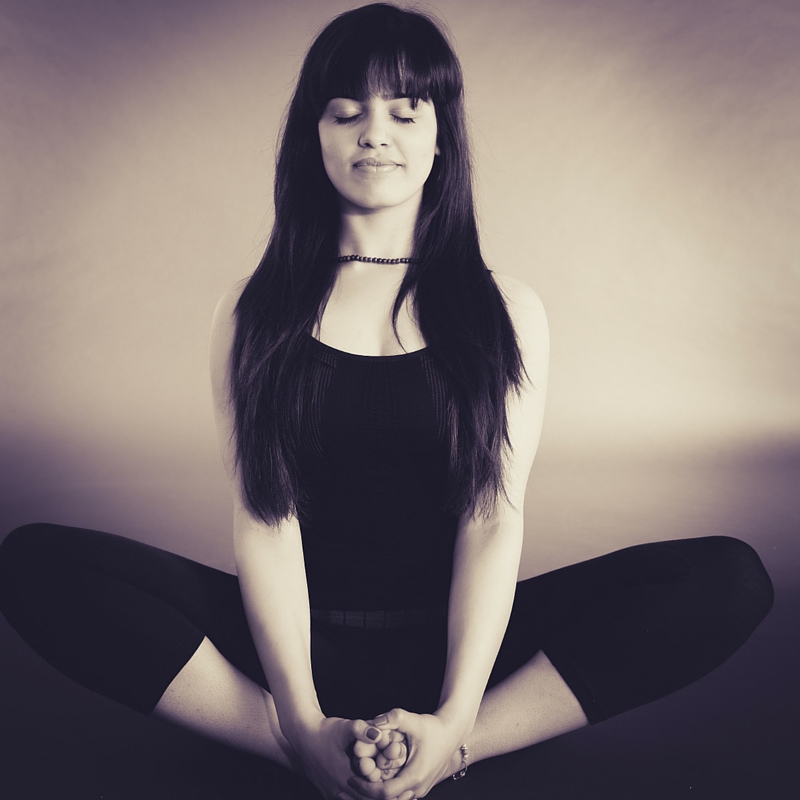

Yoga is used in many mindfulness programs, but it is used in a different way than if you go to a gym to practice yoga. With mindfulness yoga, you use yoga in a way to get to know your body better and apply self-reflection. Mindfulness yoga is a great way to strengthen the connection between your body and brain.
To introduce you to mindfulness yoga, in this blog I will go over what mindfulness yoga is, what its benefits are, and you will get a few mindfulness yoga exercises.
What is mindfulness yoga?
Mindfulness yoga is a way to strengthen the connection between your body and brain and increase self-compassion.
The first thing mindfulness yoga is all about is being kind to yourself during yoga. You don't have to perform the pose perfectly, you don't have to force your body to take the form. Rather, you need to feel the form in your body as you create it.
So you shouldn't pass judgment. You cannot perform the pose right or wrong. You have patience. The pose does not have to be performed in 1 second.
You're not competitive. You don't have to perform the pose better than your neighbor who may be participating in mindfulness yoga.
You accept. By not judging, you accept the situation more quickly as it is.
You let go. Thoughts that arise and distract you let go to refocus on your body.
You have self-compassion. Just by letting go of thoughts and accepting how the situation is you can be kind to yourself.
You experience everything as new. Experiencing everything well allows you to revisit the experience as if it were the first time.
A famous quote from Yoga Sutras is, "Suffering that is not yet there is to be avoided." This is entirely consistent with mindfulness. Because thoughts are also often about the future, they sometimes deal with suffering that is not yet there in reality. As a result, it is better to live in the here and now so that you don't have to go through that suffering either.
In mindfulness yoga, you also pay attention to the signs your body is giving you regarding the pose. If you lose your balance, have to pant really hard and notice that you can't stretch something further you listen to that. It's not about the workout, it's about the connection between your body and your brain.
In addition, so you don't judge your body's ability. Thoughts about your abilities for yoga may also be banished, as may the to-do list after the mindfulness yoga session.
Yoga poses, or actually yoga asanas, can also evoke emotion. In mindfulness yoga, you can see if you can change that emotion by breathing differently, for example. For example, you can exhale longer if you notice you are getting frustrated or breathe more evenly if something makes you sad.
The benefits of Mindfulness yoga
Mindfulness yoga has multiple benefits. It is a way to be physically engaged, strengthen the connection between your body and brain, and the way to find out how you can use your body to change even emotions.
In addition, scientific research also shows that mindfulness yoga has benefits for pregnant women. If a pregnant woman does mindfulness yoga exercises regularly, it can prevent her from developing postpartum depression and improves bonding between mother and child.
Also, mindfulness yoga has been shown to help with the symptoms of fibromyalgia(1). Women who suffered from fibromyalgia practiced mindfulness yoga twice a week for 8 weeks. Afterwards, they were less bothered by the pain, less bothered by thoughts about the pain and were able to accept the pain they were in better than before mindfulness yoga. Also, cortisol levels in the blood had become lower indicating that the study participants were experiencing less stress .
Mindfulness yoga exercises
To introduce you to mindfulness yoga in advance, I've come up with a few mindfulness yoga exercises for you. We'll start with the simplest yoga asana. It is important not to force your body to perform the pose correctly, but to feel the pose in your body.
We begin with the pose of the body which lasts 3 to 5 minutes.
The first thing you do is lie on your back with your legs slightly apart. Your feet are about the same width apart as your shoulders and your toes are turned outward. Your arms are relaxed beside your body with palms up.
First, you let your awareness go to your breathing, wherever you experience it in the body. You simply breathe as you always do. For some, this means feeling the breath in the abdomen; for others, it means feeling the breath by expanding your chest. You become aware of each breath going in and each breath going out.
So you let go of having to control your breathing, but simply become aware of how your breathing is without exercising control over it. You also don't have to make judgments about it. It is what it is, it's not good and it's not bad.
Also feel what breathing does to your whole body. Do your muscles tighten more while exhaling or inhaling? Do you perhaps even shift slightly on the surface on which you perform this exercise?
Just become aware of your breathing without influencing it. You don't have to quality your breathing. If you have short breathing or fluctuating breathing, that's all good.
Now that you are aware of your natural breathing, you can shift your attention to the rest of your body. You feel the weight of your body on the surface you are using. Do you have tension in your body? If you become aware of this does the tension go away? Do you feel everything without having to move your fingers, for example, to feel them? Or do you not really have a clear line of where your body ends and the air begins?
What parts of your body actually touch the surface?
Hold this awareness of your breathing and your body for 3 to 5 minutes. When you notice your thoughts begin to wander shift your attention back to your breathing.
The bending dog pose
The bending dog pose is one of the best-known yoga asanas out there. When you stand, you bend forward, not touching your toes with your legs extended, and walk forward with your hands until you stand in a kind of triangle where your buttocks are the top.
You may think you have to touch the floor with your heels, that your legs have to be fully extended, but with mindfulness yoga, you can let that go. You don't have to do that at all. You may move them to the floor, but this should not cause you pain or lengthen your back. It is important that you feel the pose in your body, not that your body perform the pose perfectly.
Your breathing also plays an important role in this pose. You can divide your weight between your hands and feet and experiment with this. When you do this you can become aware of the effect that that weight shift has on your breathing. Again, you don't need to control your breathing. The main thing is to become aware of what your body is doing with your breathing.
Try to finish the pose by distributing the weight evenly between your hands and feet. Don't mind if this doesn't work out perfectly. Notice that your breathing goes much easier when your weight is in the center rather than clearly on the side of your hands or feet.
If one of these two poses also gives you an emotion or thoughts about performing the asana try to let those thoughts go. Experiment with your breathing to calm the emotion and to be fully in the here and now again.
Want to learn more about how you can improve your life through your thoughts and connection with your body? Then stop by a seminar or check out the hypnosis institute Netherlands' training programs.
Sources:
http://www.mindfulyogaacademy.com/yoga-teacher-training/what-is-therapeutic-mindful-hatha-yoga.html
http://www.ctcpjournal.com/article/S1744-3881(12)00048-5/abstract
http://yorkspace.library.yorku.ca/xmlui/handle/10315/26488
Mindfulness Yoga: The Awakened Union of Breath, Body, and Mind



