


Therapy is often seen as something very serious, which makes sense, of course. Therapy is defined as any part of medicine (classical or alternative) that aims to cure a particular ailment or alleviate its symptoms
In other words, any medical technique that wants to solve a problem. And that's exactly where the shoe pinches....
Distinctions in forms of therapy
Of course, you have to make a clear distinction between classical therapy and all alternative forms of therapy, including, for example, hypnosis. Classical therapy and alternative therapy increasingly complement each other when it comes to psychological symptoms such as anxiety and depression.
If we want to understand why therapy is often considered a very serious matter, however, we need to go back to that classical medicine for a moment. Indeed, in classical medicine, therapy is an extremely serious matter. This is of course understandable, because in those cases therapy often consists of very technical procedures (just think of surgeries) or complicated drugs that lose their effect completely if anything is wrong.
With such rigorous science as a foundation, therapy as part of classical medicine can only be seen as a very serious matter that you should not deviate from in any way. When your doctor recommends a certain therapy to you, you must follow it to the letter if you want to regain your health.
It is perhaps for this reason that alternative therapies such as hypnosis, for example - which are actually completely different from classical forms of therapy - are also often viewed very seriously. Yet there are plenty of arguments for viewing it a little less seriously.
Why so serious...
Hypnotherapy, like many forms of psychotherapy, benefits from taking itself a little less seriously.
We briefly run through 12 reasons why you should take therapy a little less seriously. In it, we explain the benefits of laughing at your own problems, and discuss why seriousness can be a big hurdle for those who want to heal.
Here are the 12 reasons:
1. Seriousness arouses inferior feelings. Those feelings become linked to the problem (Pavlov conditioning) and therefore it gets worse.
Let's make it concrete for a moment. When you come to a therapist, it is to solve a specific problem. For example, you are suffering from a particular fear (heights, spiders, etc.) or you are struggling with a particular psychological problem such as insecurity.
If you want to solve this problem, you would do well to disconnect it from all the negative feelings that usually accompany it.
This is often not necessarily easy, because an anxiety or other psychological problem can be very deeply anchored to those negative emotions. What you need to do to tackle this problem is recondition yourself, and that doesn't work so well when you are one lump of seriousness.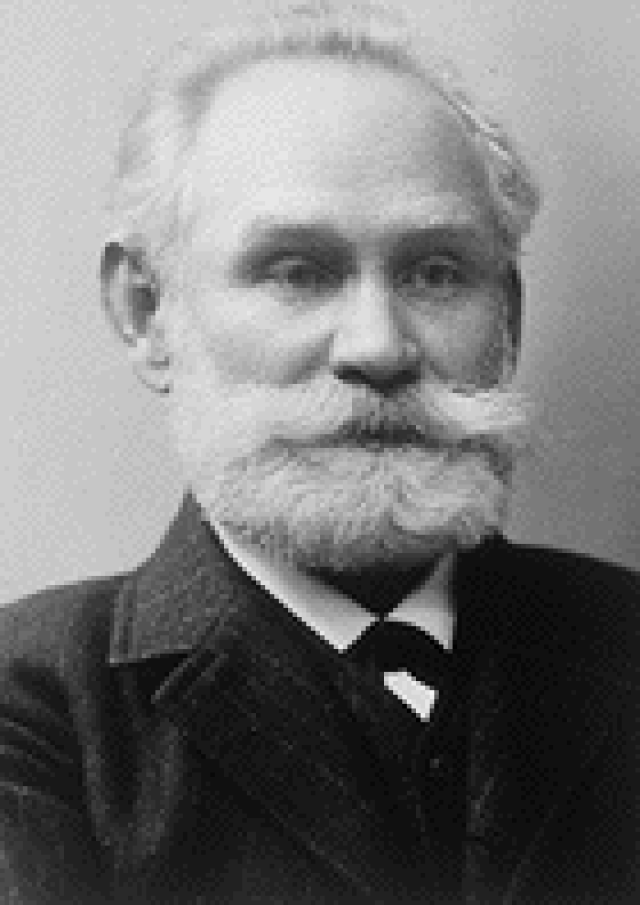
Reconditioning is Pavlov conditioning, for example. Ivan Pavlov was a Russian scientist who discovered that you can condition dogs with food. He did this through a famous experiment, and you may have heard of Pavlov's "dog." By constantly ringing a bell before feeding a dog, the dog learns to associate the bell with food.
After repeated conditioning, dogs spontaneously begin to drool when they hear a bell, whether or not food follows.
But what does this have to do with therapy and seriousness? As we said just now, the specific problem you want to solve is linked to certain negative emotions.
When you want to teach yourself new positive emotions that you will then link to the problem to neutralize it, you speak of reconditioning.
However, that reconditioning only works when you can generate good feelings, and that is usually very difficult in an atmosphere of seriousness. You may find that easier to understand when you make the situation concrete:
Imagine yourself sitting in the tightly furnished office of a dead-serious therapist who barely smiles, talks like a mortician and generally looks like a personification of death.
In such a situation of extreme seriousness, do you think you will quickly be able to generate the positive feelings you need to condition yourself? ;-)
Click here to learn more about hypnosis 2.0
2. Good feelings help you condition yourself.
 This is related to the previous point. When you want to condition yourself, you need to look for good feelings that you can use to do so. Just now we said that it is difficult to generate the necessary positive feelings in a serious situation, but actually it goes beyond that.
In fact, seriousness itself is not a positive emotion at all.
Think of moments in your life that you would associate with supreme seriousness. Perhaps you see funerals before you, or the stern face of a hated teacher, but rarely will they involve a situation you think back on with pleasure. So we can say that earnestness in itself may well be a negative emotion, and thus does not fit with conditioning.
Conclusion: it is better to work with good feelings - and therefore with as little seriousness as possible.
3. When someone laughs at their problem is it still a problem?
As human beings, we have the wonderful ability to laugh at even our worst problems. This ability to self-deprecate is what, in many cases, protects us from psychological disorders such as depression.
When trying to heal from such a condition, it is important that you try to see your own situation in a less serious framework, in other words. Instead of constantly thinking that you can't do something and making your own problems in your head worse and worse, it often pays to take a step back and have a good laugh at your own situation.
But that's not easy, because often we are so deep in our own thought processes that it seems completely unreasonable to laugh at the situation - that seems like the dumbest thing you can do!
And that's why sometimes you just need the help of a therapist who can help you see your own situation in a different (less serious) light. When you are finally able to laugh at your own problem, the problem immediately comes across as much less serious.
In some cases, such as anxiety, this is a first step toward complete healing: when you can laugh at a particular fear, that fear automatically begins to lose power.
With the help of a therapist, you can look for the best way to laugh your problem into oblivion. This can range from simple laughter therapy to deep conversations that try to undercut the seriousness of your anxiety, to advanced hypnosis techniques that will allow you to laugh at your problems through your subconscious mind.
The O.B.L. Method also works very well with this, which I will elaborate a bit more on later.
4. Everything is perception and by definition not true, so the problem can also be viewed differently.
Let's take a deeper look at things. Everything is perception and there is no universal truth. That seems like a very philosophical (and perhaps frightening) thought, but it's actually quite simple.
When you see, hear or experience something, it does not necessarily mean that someone else will see, hear or experience it the same way. This is the case not only for concrete objects, but also for personal events or abstract feelings. Above all, what you must understand is that there is no universally correct point of view from which to look at things.
That may sound very unsettling, but actually it's just reassuring: you can look at things the way you want, you yourself have the power to see your experiences, feelings, and even traumas in a different light and in a completely different way.
You can transform even the most negative experiences into positive events.
For example, if you experienced a particularly profound event in childhood that you immediately associate with fear, pain, anger or sadness, that is not the only way to look at that event. Thus, you can view every experience - no matter how negative - as a learning experience, an important link in your life that has made you the person you are today.
Instead of immediately feeling an anxiety reflex or uncontrollable anger, when thinking back on that event, you can remain calm and clear-headed. When that event is at the source of problems such as depression or phobias, and you manage to begin to view that event differently, you are in a strong position and can get to the root of the problem.
But it's not easy to accomplish this on your own, because it's often ingrained in us to view our problems from one rock-solid dead-set viewpoint. This is why the help of a therapist is helpful. A therapist can use, for example through the use of hypnosis, the power of your subconscious mind to make you view your problem differently.
He can also make you realize through OBL that everything is just perception, and that you have the power to transform your own experiences, because that realization does not come naturally to everyone.
Maybe you already know this one? Which table is longer?
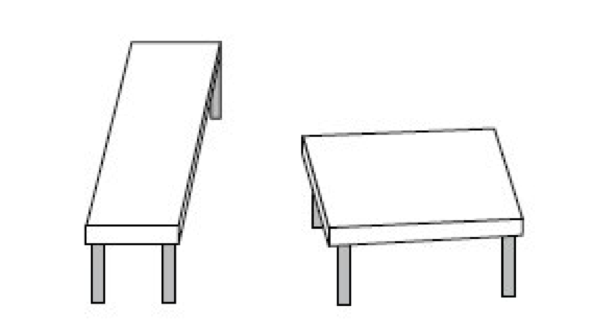
Exactly they are both equally long ...
The front of the square table is as long as the side of the long table. How do you mean perception... ;-)
Click here to learn more about hypnosis 2.0
5. Humor is soothing
We have all experienced uncomfortable situations that were suddenly saved by a well-timed joke or funny remark. In fact, this says something very important about human nature:we want to laugh at situations, we don't like too much seriousness, and we crave the soothing effects of humor.
You don't have to apply those soothing effects of humor only to concrete situations, because you can also use it when dealing with difficult problems that require therapy.
Let's take a look at an example.
A person comes to a therapist with a concrete problem: he or she wants to quit smoking and has already tried all kinds of ways, but nothing works. The therapist might make some serious suggestions, but that does not benefit the person at all because - as we said - he has already tried all the "normal" ways.
However, the therapist could also make a joke, something that immediately puts the situation in a different light, something that makes the person suddenly able to laugh at his smoking addiction, even if only for a moment. It is very clear that humor in this case has a mitigating function that makes the problem less serious and therefore much more accessible.
After all, we don't like to talk about the most serious problems, but when we are able to laugh about them, a subject is suddenly negotiable. Taboos disappear like snow in the sun. Moreover, humor also helps you psychologically out of the doldrums, because when you don't dare to joke about your own problem, you only make it worse.
6. Laughter produces endorphins, serotonin, dopamine and immune substances.
Let’s now take a look at the scientific side of things, because we can also draw some interesting conclusions from the field of biology.
When you smile, all sorts of things happen in your body that you’re probably not aware of. However, all these systems work together to produce some unique molecules, known as neurotransmitters and neuropeptides.
Endorphins are an example of a neuropeptide, and their main function in the body is to inhibit pain. Actually, endorphins are a kind of natural painkiller that your body produces itself to dim pain. However, an additional function of endorphins is a feeling of euphoria or intense bliss.
Laughing makes you produce more endorphins, which for a moment gives you a feeling of intense happiness.
Neurotransmitters are small molecules that serve as messengers for your nervous system. They travel through your body at great speed, delivering the correct signal to the correct place at the correct time. They take care of a lot of standard processes in your body, but what is interesting to us is that they largely determine how you feel.
Laughter has a significant impact on the production of such neurotransmitters. When you laugh, your neurotransmitters make you feel good.
Serotonin and dopamine are two of the most important neurotransmitters in your body. Serotonin has many functions, such as regulating the compression of your bowels, but we are not interested in that for a moment, because serotonin also has a much more relevant function, which is to determine your mood.
Serotonin production is even specifically associated with feeling happy. So when you feel happy, it actually means that your body is making a nice amount of serotonin.
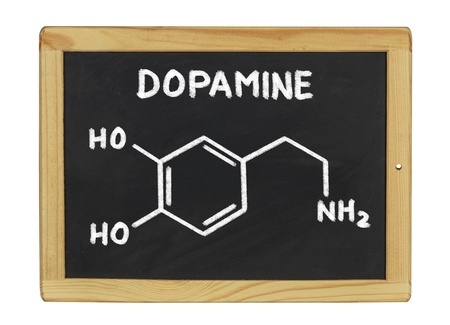 Dopamine is another neurotransmitter that works primarily in your brain, specifically in your brain's built-in reward system.
When you do something well, dopamine is produced as a reward and you feel good. In many people with psychological problems, however, this dopamine system is thoroughly disrupted.
Your brain no longer rewards itself when you do something right, and the consequences can be very drastic. Therefore, treatment for such disorders often consists of administering medications that restore your dopamine regulation.
You don't have to resort to such heavy antipsychotic drugs right away, however, because your body has a perfect way to get dopamine and serotonin production going again: laughter.
You often find that after a gratifying fit of laughter, you are completely happy, even if the cause that made you laugh was not particularly funny or even if you were sad ten minutes ago.
Using the OBL method, for example, you can learn to laugh again, which triggers the production of neurotransmitters such as dopamine and serotonin. These are substances that are very helpful in alleviating a problem, as they give you a feeling of bliss and contentment, and will help you see your problems in a less serious light.
As we explained earlier, this is a great way to address phobias, depression, insecurity or addictions, especially when conventional (serious) therapy doesn't help.
Serotonin, dopamine and endorphins also help you tackle problems with stress. In fact, the production of these neurotransmitters and neuropeptides suppresses the activity of adrenaline, a hormone you are probably familiar with.
Adrenaline is your worst enemy when you are insecure or suffering from a phobia. By reducing the production of adrenaline, you simply start to feel less stressed, suddenly making your problem much less severe.
Click here to learn more about hypnosis 2.0
7. The client often finds the problem itself ridiculous
Many of our fears and psychological problems are irrational, and we realize that. When someone exhibits a pathological fear of heights—even in the safest of situations— that person very often knows full well that it’s an irrational fear.
When we feel nervous about speaking in front of a group even though we know we’ve prepared well, we certainly know that fear isn’t helping at all. When someone wants to quit smoking and has tried all sorts of methods without success, they rightly find their situation a bit ridiculous—and that’s perfectly understandable.
So deep down, we feel that our problems have a ridiculous side, yet we dare not laugh at them. This is because it's in our heads that these are serious problems that you can't (or shouldn't) laugh at all, and that's a big problem.
After all, we do know in our subconscious that our fears are irrational, that our problems are ridiculous in their essence, yet we dare not laugh.
This has an important consequence: we don’t see problems for what they really are.
When we find a problem ridiculous deep down inside, yet still can’t bring ourselves to express that feeling, it leads to enormous tension. You’re forced to see yourself as inadequate: you can’t even manage to see this problem— which is essentially ridiculous —for what it really is.
Therefore, it is hugely important that you learn to embrace that ridiculousness. When you are fully aware of the non-seriousness of your situation and you also dare to talk about it and joke about it, then you have taken the first step.
You then become the observer of your behavior and you ARE NOT your behavior anymore. That is the O.B.L. method (Observate Behaviour And Laugh).
A therapist can help you do this, such as using the power of your subconscious to get you to think about your problem differently.
8. Change comes from thinking differently, feeling differently and seeing things differently.
When you want to address a problem, you need change, but we often forget how that change comes about in our lives. Change is too often not a matter of external factors suddenly making you see the light.
Nor is change often the result of thinking very deeply and then coming to a rational decision. No, change is a matter of experiencing things differently, seeing, understanding, and feeling things differently, and as a result: acting differently.
Think back for a moment to a profound change in your life.
What does this moment look like?
Do you find yourself pondering on your own, brooding over your problems until suddenly you see too solution?
Probably not, because it usually only gets you deeper into your problems.
By falling back on yourself, you lose the ability to self-reflect:you no longer manage to see yourself in a different light, and you can no longer laugh at your problem. As a result, your problem gets bigger and bigger, until it becomes all-consuming.
The motivation to truly change is found in the things we experience, feel, think and see.
Therefore, it is important to learn to see your problem in a different way. You do this by making concrete changes in your life that allow you to put your problem into perspective until it becomes something laughable.
One such change, for example, is taking therapy that specializes in taking your problem less seriously. This can be done, for example, through laughter therapy, the OBL method or hypnosis. When you use the power of change to turn your problem into something not so serious at all, you are well equipped to get rid of the problem once and for all.
Click here to learn more about hypnosis 2.0
9. The more serious something becomes, the more serious the problem is described, the worse people feel.
There is a strong link between how seriously you perceive a problem and how serious it becomes. However, that link works both ways. The more serious a problem is, the more seriously you take it, but also the other way around: a problem you take very seriously automatically becomes serious.
In other words,  we have the power to use our brains to influence the severity of a problem. When we think less seriously about a problem and allow ourselves to laugh at it, it naturally becomes less severe.
We showed just now that taking a problem less seriously can help you combat it, and we also already said that laughter can help you create substances that help you do this, but there is more.
When you take a problem seriously, your body automatically creates adrenaline. We mentioned earlier that adrenaline is linked to stress, but adrenaline has even more negative effects.
For example, the amygdala, the part of your brain responsible for memories, decisions and emotions, becomes hypersensitive when you produce too much adrenaline, and this has particularly negative effects on all areas in which the amygdala plays a role.
So if you have a psychological problem you want to eliminate, you should definitely avoid them.
View your problems in a less serious way, then your body will produce less adrenaline, which in many cases can dramatically alleviate the problem.
10. The body and people's unconscious is genius. Smarter than the conscious of the doctor or therapist.
Even with all the wonders of modern science, the most complicated psychological models and the very latest techniques from neurobiology, we must admit that we actually still know very little about the human body, and much less about our subconscious.
However, if there is one thing we know with certainty, it is that the body and your subconscious mind are absolute gems of genius. Throughout evolution, the human body has found solutions to problems that even the smartest mathematicians can't dream of, and your subconscious mind makes complex connections between the most diverse subjects.
So isn't it crazy to rely on the consciousness of a doctor or therapist when your subconscious is just that much smarter? By this, of course, we don't mean that a doctor or therapist can't have useful advice, but let's face it: very often the solution to personal psychological problems is within yourself.
If you have a fear of spiders or are insecure, the solutions lie not a drug, but deep within yourself.
And we can add an interesting reflection to that: when your own consciousness is so much dumber than your subconscious, why even bother being serious....
11. When people believe it will work, it often works better
Therapies such as hypnosis work only when the person cooperates properly. To some degree, all hypnosis is self-hypnosis, and you can easily understand that if you have ever undergone hypnosis. It simply does not work when you are not open to it yourself.
To be open to this kind of therapy, you need a kind of wonderment and may not take the whole process too seriously. That wonderment causes people to believe harder in the therapy and thus cooperate better.
Don't underestimate the placebo effect either. Placebos have a bad name because they are supposedly not "real," but when it simply works, it's hard to complain about it. The placebo effect of therapy consists mainly of people believing that the therapy will work.
When they believe their problem will be solved, they immediately see the future much brighter, and in many cases that is enough to bring about positive change. Those who believe in therapy are also more cooperative and will eventually succeed in taking their problem less seriously.
Click here to learn more about hypnosis 2.0
12. Change is a simple structure. Couple good feelings with the problem and the problem disappears ... so why bother?
Actually, change is very simple. We just explained that change is a matter of thinking, feeling, and seeing things differently. When you view your problem in a positive light and associate it with positive feelings, it disappears.

Does that sound simple?
Then you're right, because actually it's not all that difficult. When you put your problem into perspective in your mind and take things a little less seriously, your problem automatically becomes less serious.
Bottom line: make sure you have good feelings and don't take your own problems too seriously.
This is the key to success.
Watch the OBL Method in action below by the method's creator himself.
Click here to learn more about hypnosis 2.0
Having read through these 12 reasons, hopefully you realize why therapy should not be so serious. In fact, being serious brings a whole lot of stress and negative feelings, which work against solving the problem. Instead, it pays to look at your problem a little less seriously.
This automatically reduces the problem. Moreover, your body will help you by producing endorphins, dopamine and serotonin. These are substances that make you feel happy and give you the power to see a problem in a different light.
A therapist can help you, for example through hypnosis or OBL, look at your problems in a less serious way, but you can also do some exercises on your own. Simple therapy methods such as laughter exercises can easily be done by yourself, or you can get some friends together and celebrate the ridiculousness of your problems together.
In any case, the 12 reasons in this article will immediately give you a good foundation for looking at your life in a more positive and less serious way.
Share this article by pressing the buttons below. That way you share it with as many people as possible and more and more people will find out that you can get rid of your problems a lot easier and more fun. :-)
Want to get rid of your problems yourself in this unique way? You can. I am looking for candidates for my TV program. You can sign up below and we will email you as soon as possible.
[socialbuttons]




Anja van Lieshout
on 13 Jul 2015carla
on 13 Jul 2015herma post
on 15 Jul 2015Marijke Mulder
on Jul 18, 2015Monique
on 21 Jul 2015